Lake Nokoué
Lake Nokoué
A vast brackish lake north of Cotonou, Lake Nokoué is home to the stilt settlement of Ganvié and a community of Tofinu fishermen living entirely on the water since the 17th century.
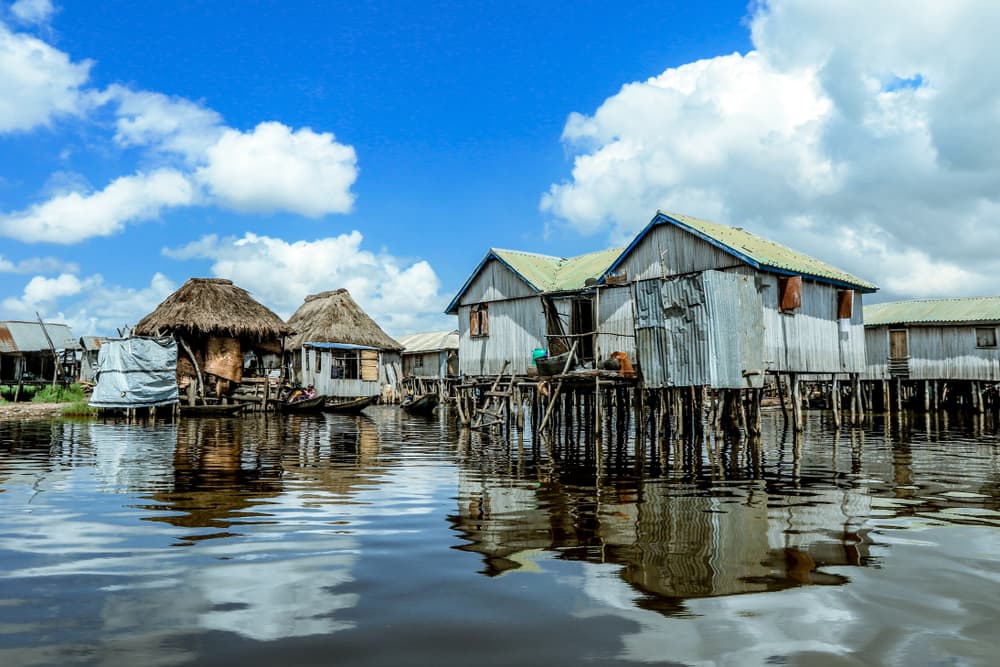
Lake Nokoué stretches north of Cotonou, between the coastal lagoon and the Abomey-Calavi plateau lands. This vast brackish expanse of roughly 150 square kilometers is inseparable from Ganvié, a stilt settlement rising from the waters. A place of fishing, commerce, and daily life for tens of thousands, it offers a rare glimpse into an amphibious civilization still very much alive.
Quick reference
- Access: motorized canoe departures from the Abomey-Calavi landing (north shore) or from Cotonou.
- Recommended duration: half a day minimum to reach Ganvié and explore the lake.
- Dress code: no restrictions; bring a hat and sunscreen, as sun intensity on the water is high.
- Accessibility for persons with reduced mobility: limited — access is by boat only; quays are unequipped.
What you'll see
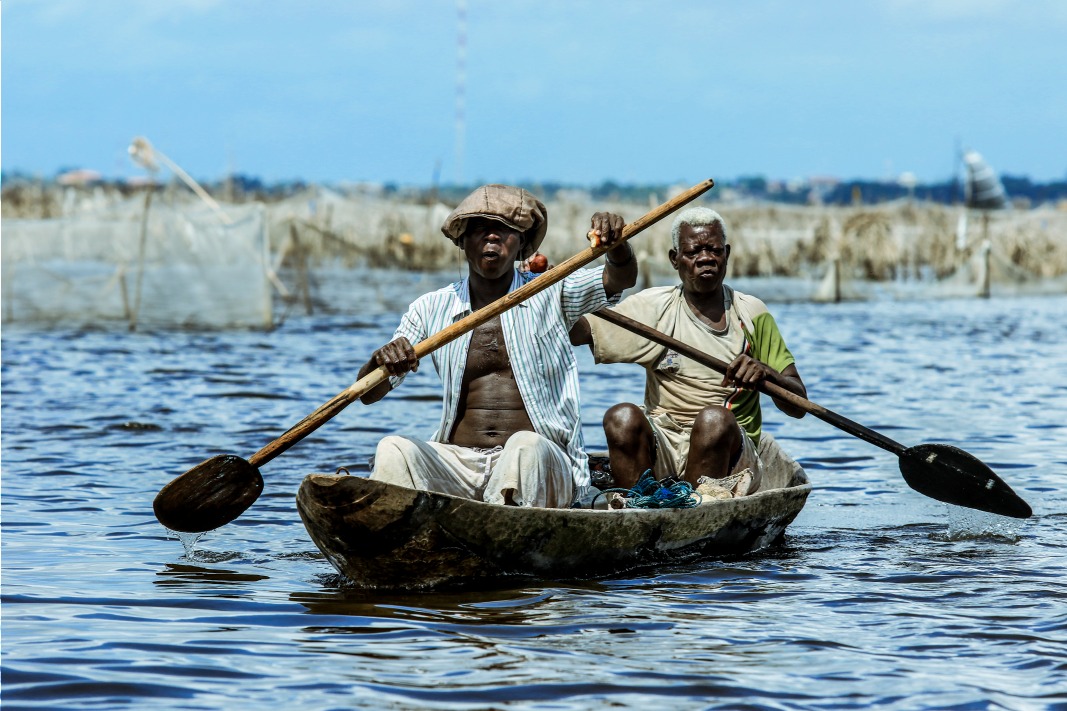
The lake presents itself as a landscape of fishing nets, bamboo fish traps (acadja), and canoes gliding between stilt houses. The Tofinu fishermen navigate their boats laden with catfish, tilapia, and shrimp. On the horizon, the corrugated iron and thatched roofs of Ganvié rise from the water, forming an instantly recognizable silhouette.
History and context
The Tofinu sought refuge on the lake in the 17th and 18th centuries to escape slave raids from the Dahomey kingdom. Dahomean warriors, whose beliefs forbade combat on water, could not reach them. This survival strategy gave birth to Ganvié, whose name roughly means "we survived" in Fon. The lakeside community has perpetuated a way of life organized entirely around water ever since.
Highlights of your visit
The canoe journey
The trip from Abomey-Calavi takes roughly thirty to forty minutes. The progression across the water, between rows of fish traps and market canoes, constitutes the central experience itself. Early in the morning, lake traffic is at its peak.
Ganvié's floating market
Women vendors paddle their pirogues selling vegetables, smoked fish, cloth, and everyday goods. This mobile market, without fixed stalls or quay, operates on schedules dictated by fishermen's arrivals.
The acadjas
These fish parks made from submerged branches are a traditional aquaculture technique unique to Lake Nokoué. They cover a large portion of the lake's surface and bear witness to hydraulic know-how passed down through generations.
Sunset over the lake
In late afternoon, low-angle light paints the water ochre and pink. The silhouettes of canoes and stilts stand out sharply — a powerful photographic moment if you time your return for evening.
Photography tips
Morning light (before 9 a.m.) is the softest and most favorable for portraits and fishing scenes. Protect your equipment from humidity and splashes — a waterproof cover is recommended. Always ask residents' permission before photographing them; some decline or request a contribution.
Location and access
Lake Nokoué borders Cotonou to the north and extends toward Abomey-Calavi to the west. The main landing for Ganvié is at Abomey-Calavi, accessible from Cotonou by taxi or zémidjan (motorcycle taxi). The road skirting the lake's south shore connects Cotonou to Porto-Novo to the east. No bridge crosses the lake; the canoe remains the only way to reach Ganvié.
Nearby
- Ganvié — the stilt settlement, the main destination for Lake Nokoué excursions.
- Dantokpa Market — West Africa's largest open-air market, in Cotonou, a few kilometers south.
- Historic center of Porto-Novo — former colonial and royal capital, accessible by road skirting the lake's south shore.
- Honmè Museum in Porto-Novo — former royal palace converted into an ethnographic museum, in Porto-Novo.
Frequently asked questions
The dry season (November to March) offers the best conditions: clear skies, calmer navigation, and manageable heat in the morning. During the rainy season, the lake rises and some areas become difficult to access.
Yes. The national road skirting the lake's south shore connects Cotonou to Porto-Novo in less than an hour. You can visit Ganvié in the morning and Porto-Novo in the afternoon on the same day.
Canoes are available at the Abomey-Calavi landing without prior reservation. Going through a local agency lets you negotiate rates and have an English-speaking guide on board.
Photography is generally tolerated on the lake. In Ganvié, it is customary to ask residents' permission before photographing them. Some refuse or request compensation.
Plan for a half day for the round trip and a quick exploration of Ganvié. A full day allows you to visit the floating market, have lunch on site, and enjoy the sunset over the lake.
Lake Nokoué is brackish and non-potable water. Avoid prolonged direct contact with the water and do not drink it. Bring bottled water for the day.
Interested in this visit?
We can include it in your personalised itinerary.