Royal Palace of Honmè (Abomey)
Royal Palace of Honmè (Abomey)
In the heart of Abomey, the Honmè Palace is the palatial complex of the kings of Dahomey, a UNESCO World Heritage site. Polychrome bas-reliefs, royal thrones, and vodoun altars tell twelve centuries of Dahomean power.
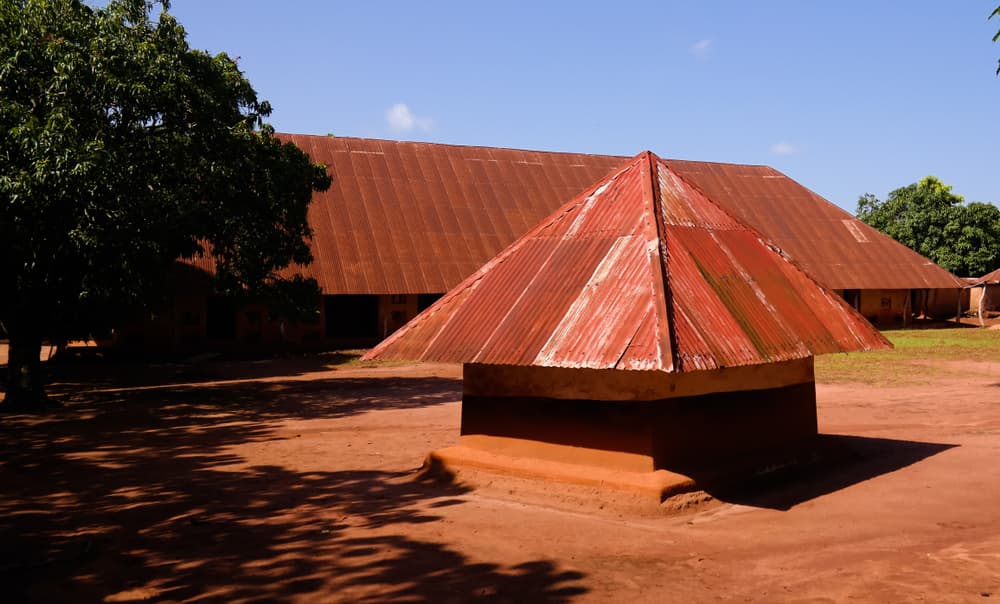
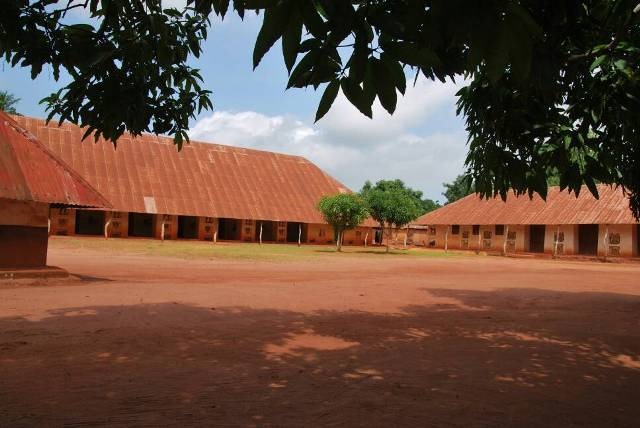
In the heart of Abomey, the former capital of the kingdom of Dahomey, the Honmè Palace is one of the royal palatial complexes inscribed on the UNESCO World Heritage List. Built from the 17th century onwards, it now houses the Historical Museum of Abomey. Polychrome bas-reliefs, royal thrones, and vodoun altars tell the story of twelve generations of kings who shaped one of the most powerful states of pre-colonial West Africa.
Practical Information at a Glance
- Admission: paid (national museum managed by the Beninese state)
- Recommended duration: 1.5 to 2 hours to explore the courtyards and exhibition halls
- Dress code: appropriate attire recommended; certain ritual areas require removing shoes
- Access: Abomey is accessible from Cotonou by national road (approximately 145 km); shared taxi or rental car from Cotonou or Bohicon
- Guided tours: official guides available on-site; a guided tour is highly recommended to understand the bas-reliefs
What You'll See
The site comprises several palaces built by different kings of Dahomey. The rammed-earth buildings house clay bas-reliefs painted to illustrate the military exploits and symbols of each reign. The museum preserves thrones inlaid with human skulls, anthropozoomorphic statues, and applied hangings (tapestries) representing dynastic history.
- Polychrome bas-reliefs: narrative friezes covering the exterior walls of the palaces
- Royal thrones: museum masterpieces, including that of King Glélé
- Vodoun altars: ritual spaces still in use, witnesses to living spirituality
- Applied hangings: embroidered textiles recounting the wars and alliances of the kings
- Tomb of King Béhanzin: the last great king of Dahomey before French colonization
History and Context
The kingdom of Dahomey developed in Abomey from the early 17th century. Each king built his own palace within the royal enclosure, gradually expanding the complex. At its height, the kingdom controlled a large part of present-day Benin and actively participated in the transatlantic trade. In 1892, French troops captured Abomey; King Béhanzin set fire to part of the palaces before surrendering. UNESCO inscribed the site on the World Heritage List in 1985.
Highlights of the Visit
The bas-reliefs of the Palaces of Guézo and Glélé
These molded and painted clay friezes form a veritable history book. Each panel represents an episode from a reign: battles, tributes, totemic animals. Reading them requires a guide to decode the symbols specific to each sovereign.
The Hall of Thrones
Royal thrones, some adorned with human jaws according to Dahomean warrior tradition, are displayed in a dedicated hall. These objects illustrate the symbolic and military power of Dahomean kings.
The Applied Hangings
Made by artisans of the royal guild, these large tapestries of cut and sewn fabric tell the story of reigns in images. Some original pieces are preserved in the museum; artisan workshops continue this technique in Abomey.
Etiquette and Visitor Rules
- Remove shoes before entering certain ritual spaces or vodoun altars.
- Do not touch the bas-reliefs or displayed objects.
- Ask permission before photographing active altars or site guardians.
- Respect silence in areas of spiritual significance.
Photography Tips
Morning light (before 10 a.m.) is ideal for photographing bas-reliefs without harsh shadows. The interior courtyards offer good angles on the ochre-colored earth walls. Photography is generally permitted in museum spaces, but check with your guide for ritual areas. A wide-angle lens is useful in narrow courtyards.
Location and Access
The Honmè Palace is located in the center of Abomey, a town in the Zou department. Abomey is accessible from Cotonou by national road via Bohicon, the nearest town with a railway station. From Bohicon, motorcycle taxis and shared taxis reach Abomey in a few minutes. The site is signposted in the town center.
Travelers organized with Nomadays benefit from a transfer from Cotonou and an English-speaking guide specialized in Dahomean history.
Nearby Attractions
- Historical Museum of Abomey — integrated into the palatial site, it deepens the royal collection with contextualized explanations.
- Abomey Market — a few minutes' walk away, ideal for finding applied hangings and bronze sculptures made by local artisans.
- Ouidah — a former port city of the slave trade, approximately 100 km away, with the Slave Route and the Temple of Pythons.
- Ganvié — a lake village on Lake Nokoué, accessible from Cotonou, often combined with Abomey on a multi-day circuit.
Frequently asked questions
The dry season (November to March) is the most comfortable: moderate heat and passable roads. Avoid the main rainy season (June-July) when secondary tracks may be difficult to access.
It is not mandatory, but highly recommended. The bas-reliefs and royal objects are difficult to interpret without interpretive keys; official site guides master dynastic history and vodoun symbols.
The distance between the two towns makes combining them in a single day very rushed. It is better to dedicate one day to Abomey and another to Ouidah, stopping in Bohicon or Cotonou.
Photography is generally allowed in the courtyards and exhibition halls. Certain active vodoun altars are off-limits for photography; your guide will indicate the areas involved.
Appropriate attire is expected. Bring shoes that are easy to remove, as certain ritual spaces require entering barefoot.
Allow between 1.5 and 2 hours to explore the main courtyards, museum halls, and bas-reliefs. Add extra time if you wish to visit the nearby artisan workshops.
Interested in this visit?
We can include it in your personalised itinerary.