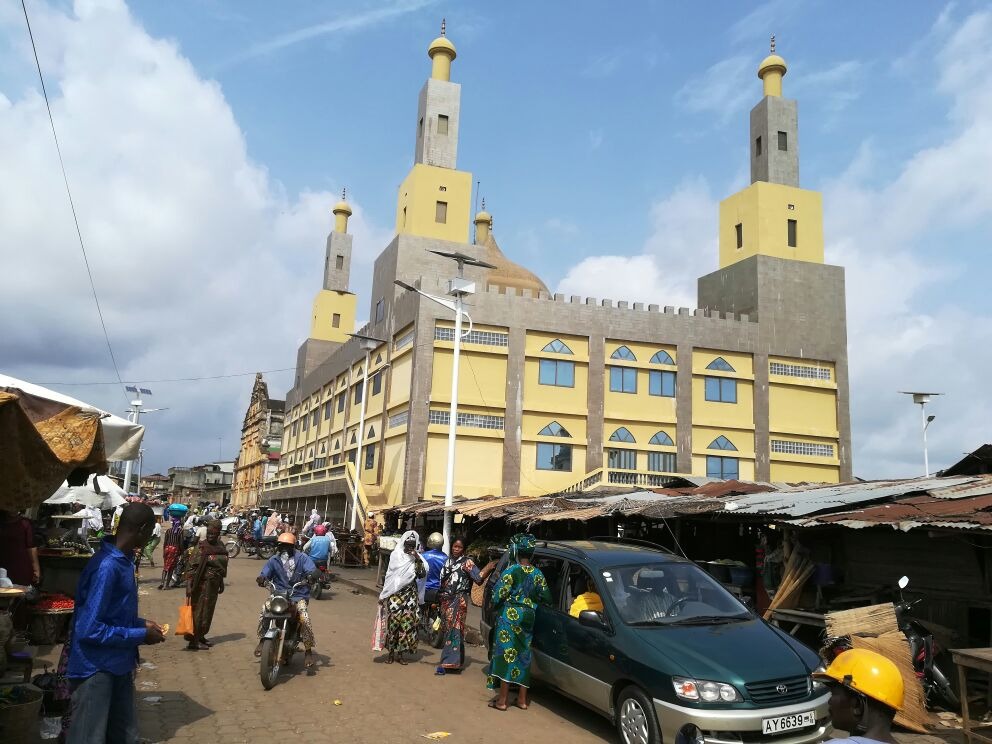
Ouèssè
Ouèssè, in the heart of the Collines department, is an authentic crossroads of central Benin. A vibrant market, wooded savanna landscapes and traditional Mahi villages make up the essence of this stop off the beaten tourist path.
Ouèssè is a town in the Collines department, in central Benin. A crossroads between the north and south of the country, it sits within a landscape of wooded savanna and gentle hills. The town is known for its bustling market and its role as the administrative and commercial hub for the entire Collines region.
What to See
Ouèssè presents an authentic face of rural Benin. The central market brings together farmers, craftspeople and traders from surrounding villages. The surrounding area reveals a landscape of wooded hills characteristic of the department, ideal for walks off the beaten tourist path.
- Ouèssè Market: a weekly meeting point, reflecting the local economy and exchanges between communities.
- Collines Landscapes: wooded savanna, inselbergs and valleys that structure the territory.
- Surrounding Villages: rural communities where traditional practices and local vodou cults persist.
History and Context
The Collines department, of which Ouèssè is one of the communes, corresponds to a zone of historical transition between the kingdoms of the south (Dahomey, Ouidah) and the peoples of the north. Ouèssè was long a stopping point on Benin's interior trade routes. The region is populated notably by the Mahi, an ethnic group whose history is linked to conflicts and deportations of the precolonial era.
Location and Access
Ouèssè sits on the main route connecting Cotonou to Parakou, Benin's principal national road. The town is accessible by bus or bush taxi from Dassa-Zoumé to the south or from Parakou to the north. The road is generally passable in the dry season; secondary tracks to villages can be difficult during the rainy season.
Nearby
- Dassa-Zoumé — neighboring town renowned for its sacred caves and Catholic pilgrimage, less than an hour south.
- Savalou — former royal city of the Collines department, with historical heritage and traditional ceremonies.
- Parakou — major northern city, the region's primary commercial and transport hub.
Frequently asked questions
Regular buses and bush taxis connect Cotonou to Ouèssè via the national road. The journey passes through Dassa-Zoumé. Plan for several hours of travel depending on your chosen mode of transport.
The dry season (November to March) is the most comfortable for traveling. Secondary tracks to villages are passable and temperatures remain manageable.
Yes. Dassa-Zoumé and Savalou are nearby and together with Ouèssè form a coherent circuit within the Collines department, accessible in a few days.
Accommodation options remain limited and modest. It is advisable to check with a local agency or plan to stay in Dassa-Zoumé, which is better equipped with tourism infrastructure.
The town is accessible, but organized tourism resources are rare. Guidance from a local guide or agency makes discovering the region's villages and intangible heritage easier.
Want to discover this destination?
Our local advisors design your tailor-made trip.