Royal Palace of Honmé (Abomey)
Royal Palace of Honmé (Abomey)
In Abomey, the royal palaces of Honmé trace the history of the powerful Kingdom of Dahomey. Clay bas-reliefs, royal thrones and the tombs of sovereigns make up this UNESCO-listed site, a must-see in Benin.
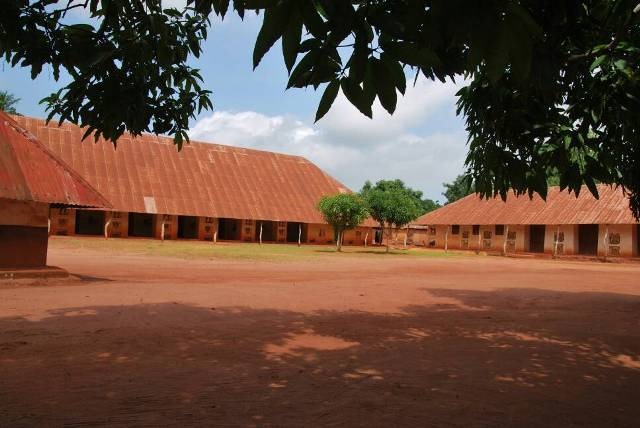
At the heart of Abomey, the royal palaces of Honmé constitute the most significant historical site in Benin. Once the capital of the Kingdom of Dahomey, this palatial complex housed the residences of kings who governed the region from the 17th to the 19th century. Listed as a UNESCO World Heritage site since 1985, the site bears witness to a rare political and artistic organization in West Africa.
Practical information at a glance
- Entrance: fee required (UNESCO site managed by the Abomey Historical Museum)
- Recommended duration: 2 to 3 hours to explore the entire site
- Dress code: formal attire recommended; certain sacred areas impose specific rules
- Access: Abomey is accessible from Cotonou by national road (approximately 130 km)
- Guide: guided tour strongly recommended — English-speaking local guides are available at the site entrance
What you'll see
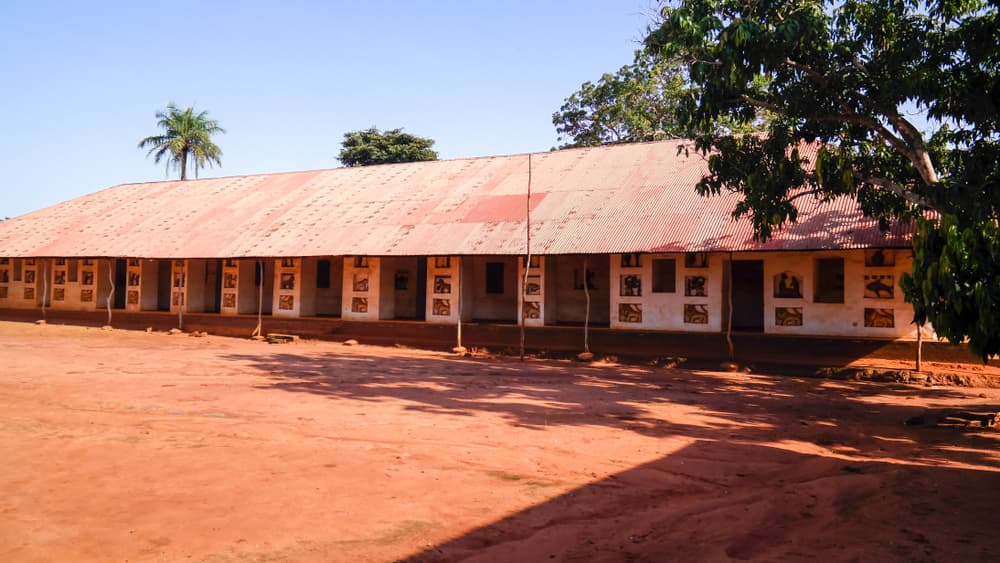
The complex comprises several palaces built by different sovereigns. Each king constructed his own residence while preserving those of his predecessors. The clay bas-reliefs adorning the outer walls are the site's visual signature: they narrate military exploits, royal symbols and mythological tales specific to each reign.
The Abomey Historical Museum, housed in two restored palaces, presents royal thrones, ceremonial regalia, anthropozoomorphic statues and ritual objects. The thrones — some of which rest on the skulls of vanquished enemies — illustrate the symbolic power of the kingdom.
History and context
The Kingdom of Dahomey was born in the early 17th century under the reign of Houégbadja. Abomey quickly became a regional center of power, controlling trade routes and tragically participating in the transatlantic slave trade. King Béhanzin resisted French colonization until 1894 before being exiled. The palaces were partially burned during the defeat to prevent their capture.
UNESCO inscribed the site in 1985. Following damage caused by a tornado in 1984, restoration work was carried out to preserve the earthen structures and bas-reliefs.
Highlights of the visit
The clay bas-reliefs
Genuine visual chronicles, these sculpted panels cover the perimeter walls and palace facades. Each motif — lion, shark, bird — refers to a specific king and his symbolic attributes. Their interpretation requires a guide to grasp their full depth.
The royal thrones
Displayed in the museum, these carved wooden and metal thrones are among the most striking pieces. Their construction incorporates materials with strong symbolic significance, including human bones for certain sovereigns.
The royal tombs
Several kings are buried within the palace grounds. These funerary spaces, still venerated by descendants of the royal family, give the site a living spiritual dimension.
The palace of Guézo
The palace of King Guézo (reign 1818–1858) is one of the best preserved. Guézo is a central figure in Dahomey's history, known for strengthening the Amazon army (Agojie) and developing trade with Europeans.
Etiquette and visiting rules
- Certain areas of the site remain sacred and are off-limits to unaccompanied visitors.
- Always ask permission before photographing people or ritual objects.
- Respect the instructions of site guards, some of whom are descendants of the royal family.
- Do not touch the bas-reliefs or displayed objects.
Photography tips
Morning light is ideal for photographing the bas-reliefs: it brings out the relief of the clay sculptures without overexposure. East-facing facades are particularly well-lit early in the day. Check with your guide which areas allow photography — some museum rooms prohibit it.
Location and access
The site is located in downtown Abomey, a town in the Zou department. From Cotonou, allow approximately two hours by road via the national highway. Regular buses and minibuses connect the two cities. Within Abomey itself, the palace is accessible on foot from the city center or by motorcycle taxi (zémidjan). Accessibility for people with reduced mobility is limited due to earthen ground and high thresholds in the historic buildings.
Nearby attractions
- Abomey Market — a bustling market where artisans and merchants offer textiles, sculptures and local products.
- Nesuhwe Temple — a Vodou temple in Abomey linked to royal cults, a living testament to Dahomey's spiritual practices.
- Ouidah — a coastal town approximately 100 km away, a former hub of the slave trade, with the Route of Slaves and the Python Temple.
- Cotonou — Benin's economic capital and logistical starting point for exploring the southern part of the country.
Interested in this visit?
We can include it in your personalised itinerary.