Royal Palaces of Abomey
Royal Palaces of Abomey
Former capital of the Dahomey Kingdom, Abomey preserves a complex of royal palaces designated UNESCO World Heritage. Polychrome bas-reliefs, dynastic thrones and a historical museum recount two centuries of African power.
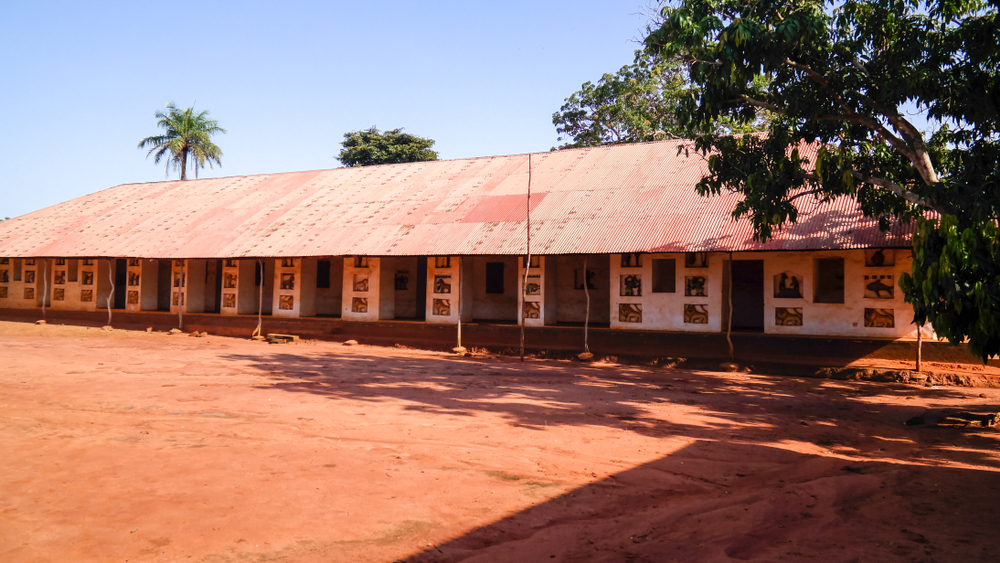
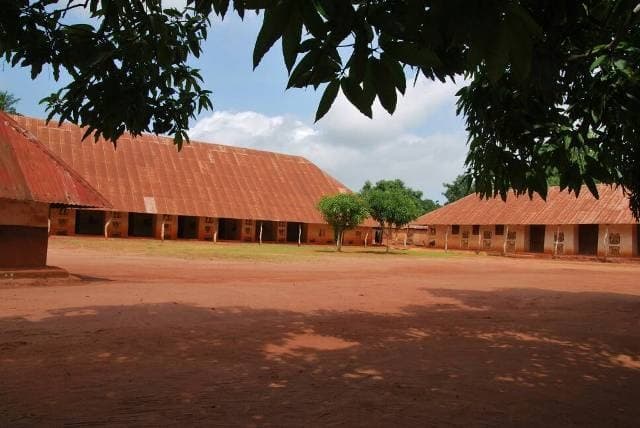
In Abomey, in central Bénin, the royal palaces form the former heart of the Dahomey Kingdom. Twelve kings succeeded one another between the 17th and 19th centuries, leaving a palatial complex unique in West Africa. Listed as a UNESCO World Heritage site since 1985, the site brings together polychrome bas-reliefs, dynastic altars and royal objects that tell two centuries of political and military power.
Practical information at a glance
- Entrance: paid (ticket includes Abomey's historical museum)
- Suggested duration: 2 to 3 hours to explore the courtyards and museum
- Guide: highly recommended — official guides are available at the site entrance
- Dress code: no strict dress restrictions, but neat attire is expected
- Access: Abomey is accessible from Cotonou by national road (approximately 130 km); shared taxi or bus from Dantokpa station
What to see
The site covers several hectares and groups the palaces of different kings. Two main complexes are open to visitors: the palace of Guézo and that of Glélé. The Abomey Historical Museum, housed in these palaces, preserves thrones inlaid with human skulls, royal regalia, fabric appliqué banners and anthropomorphic statues representing each sovereign.
The clay bas-reliefs that adorn the exterior walls are the most striking feature. Each panel illustrates an episode from a king's life: battles, tributes, dynastic symbols. Some were restored after partial destruction caused by King Béhanzin himself in 1892, to prevent the French from seizing them.
History and context
The Kingdom of Dahomey was born in the early 17th century under the reign of Houégbadja. Abomey became its capital and each king built his own palace there, adjacent to the previous one, forming a complex that extended over more than 40 hectares at its height. Dahomey is known for its army of female soldiers—the Agojie, called the "Amazons" by Europeans—and for its role in the transatlantic slave trade.
In 1892, King Béhanzin set fire to part of the palaces before surrendering to French General Dodds' troops. Colonization ended the monarchy, but the surviving structures were preserved and transformed into a museum as early as 1944.
Highlights of the visit
The dynastic bas-reliefs
Each king possessed an animal or plant symbol unique to him. The shark for Béhanzin, the lion for Glélé, the buffalo for Guézo. These motifs are repeated on the bas-reliefs, fabric appliqués and ceremonial objects, forming a coherent visual language to decipher with a guide.
The royal thrones
Several thrones are displayed in the museum. Guézo's throne rests on skulls of defeated enemy chiefs—a staging of royal power that reflects Dahomey's political codes. These pieces are among the most photographed in the museum.
The fabric appliqués
The appliqué hangings (patchwork) represent historical scenes and royal symbols. Made by the Yovogan embroiderer guild, they constitute a living textile art: craftsmen's workshops perpetuate this tradition in Abomey, just steps from the site.
The dynastic altars
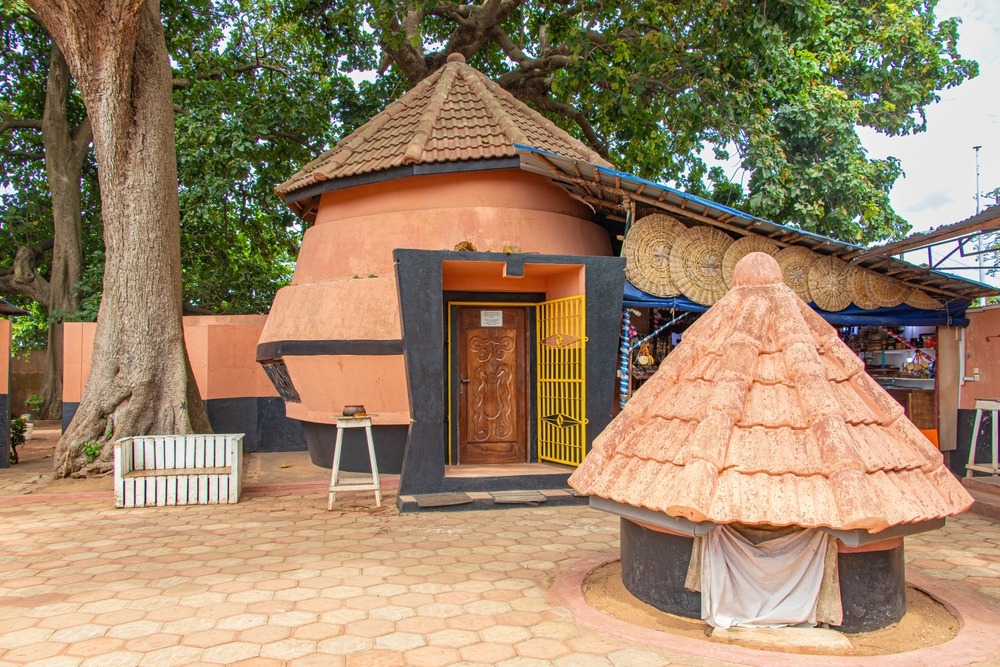
Altars dedicated to deceased kings remain active on the site. Some are the subject of voodoo ceremonies. The guide explains the protocols and visible offerings, which testify to the continuity of royal religious practices.
Photography tips
Morning light is ideal for photographing bas-reliefs without harsh shadows. The ochre and red colors of the walls stand out well in late morning. Inside the museum, lighting is dim: a camera performing well in low light is useful. Always ask permission before photographing active altars or site custodians.
Location and access
The site is located in central Abomey, a town easily identifiable on the Cotonou–Parakou axis. From Cotonou, allow approximately two hours of driving. Local agencies offer day trips from the coast. The site is not wheelchair accessible due to packed earth floors and thresholds between courtyards.
In the immediate vicinity, the appliqué workshops in the artisan district deserve a stop. For an in-depth guided tour, the museum's official guides speak English and offer themed itineraries on royalty, voodoo religion or military history.
Nearby attractions
- Nesuhwe Temple — royal voodoo temple in Abomey, linked to the cult of royal ancestors of Dahomey.
- Abomey Market — lively central market where fabric appliqués, sculptures and ceremonial objects are bought and sold.
- Ouidah — former port city approximately 100 km away, historical center of the slave trade and major voodoo destination in Bénin.
- Slave Route (Ouidah) — a 4 km memorial route linking the former slave market square to the Gate of No Return on the beach.
Interested in this visit?
We can include it in your personalised itinerary.