Ganvié
Ganvié
Ganvié is a village of twenty thousand inhabitants entirely built on stilts in the middle of Lake Nokoué. Founded to escape slave raids, it preserves a unique lacustrine way of life, between floating market and traditional fishing.
Ganvié is a lacustrine village built entirely on stilts in the middle of Lake Nokoué, about twenty kilometers north of Cotonou. Its roughly twenty thousand inhabitants have lived, worked, and traveled by water for centuries. The village is often nicknamed the "Venice of Africa," but it possesses its own identity, forged by historical necessity and a thriving fishing economy.
Quick reference guide
- Access: motorized pirogue departure from the Abomey-Calavi landing; approximately 30-minute journey across the lake.
- Entry: paid — village entrance fee + mandatory pirogue rental with guide.
- Recommended duration: 2 to 3 hours for a complete visit including the floating market tour.
- Dress code: no restrictions, though lightweight clothing and a hat are recommended (strong sun exposure on the water).
- Accessibility: limited — access is only by pirogue; landing docks are not equipped for wheelchairs.
What to see
Hundreds of wooden and bamboo houses rest on stilts driven into the lake. The streets are canals traversed by pirogue. A floating market draws fishermen and traders each morning. You'll also observe a school, churches, and a mosque, all constructed on the water. The acadjas — submerged branches enclosures serving as fish nurseries — dot the lacustrine landscape.
History and context
The village was founded sometime between the sixteenth and seventeenth centuries by the Tofinu people, fleeing slave raids from the Dahomey kingdom. The Fon warriors avoided water due to religious belief, making the lake a natural refuge. The name "Ganvié" roughly means "we have survived" in Fon. This context of resistance explains the inhabitants' deep attachment to their lacustrine way of life, maintained to this day.
Highlights of your visit
The floating market
Early in the morning, pirogues laden with fresh fish, vegetables, and manufactured goods gather on the lake. Trading happens from pirogue to pirogue. This is the most lively and photogenic moment of the day.
The acadjas
These submerged branch enclosures represent a unique traditional fish farming technique. Local guides explain how they work and their central role in the village's economy.
The pirogue journey
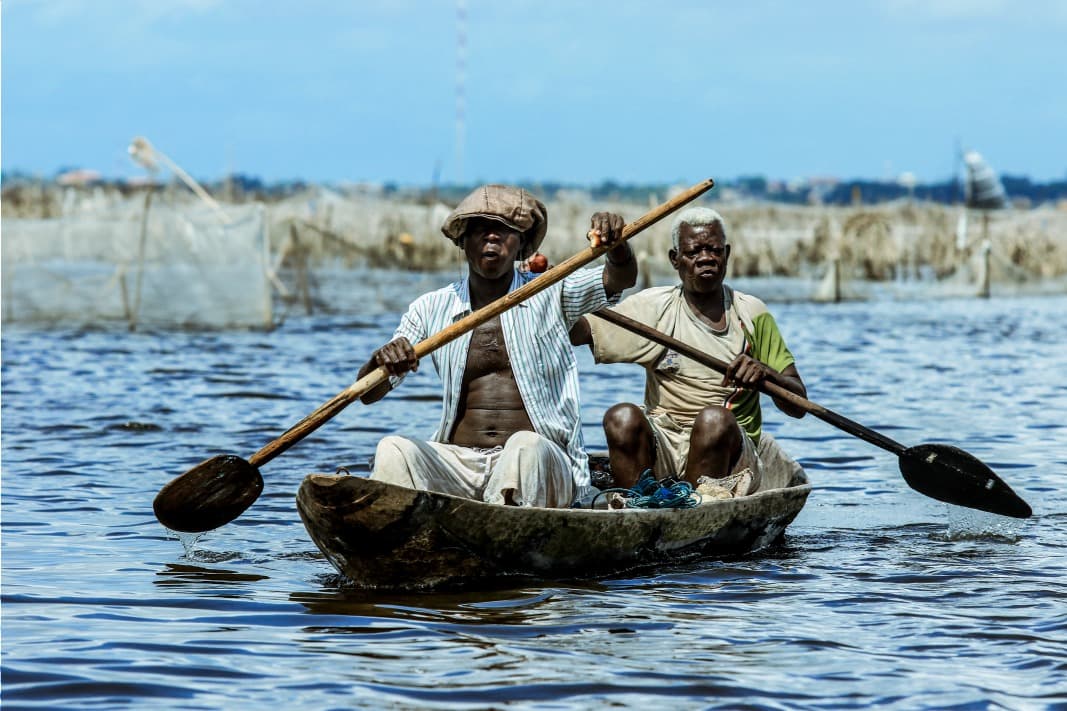
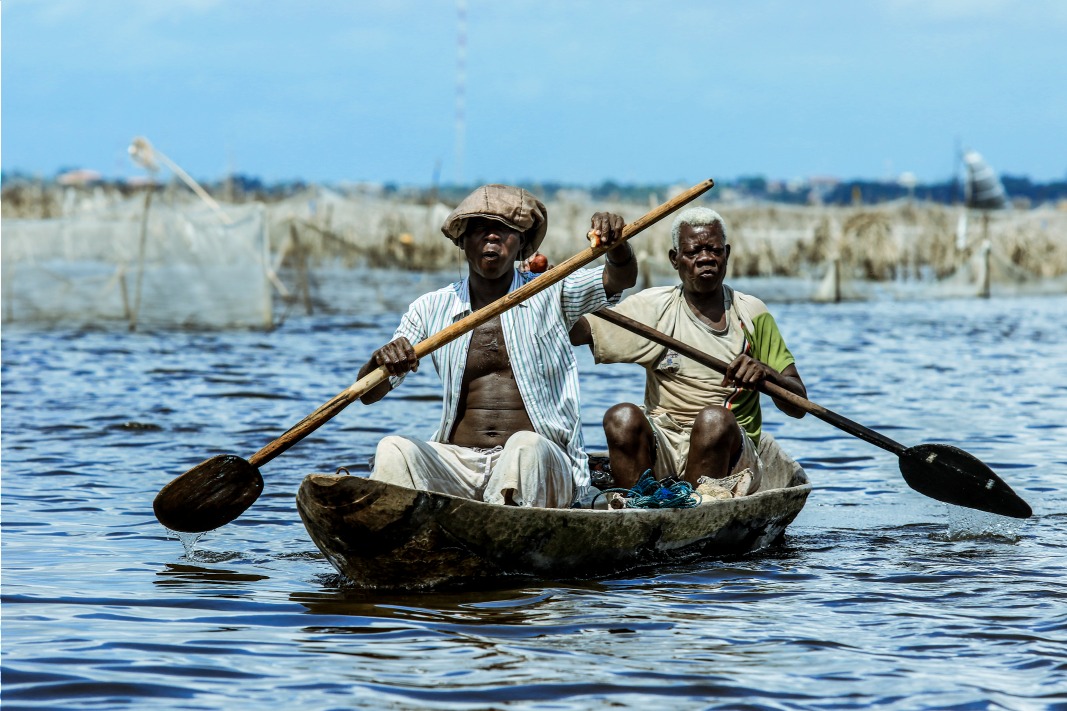
The trip from Abomey-Calavi is part of the experience. Lake Nokoué stretches endlessly before you; you'll pass fishermen, women transporting goods, and sometimes children paddling alone to school.
Photography tips
Light is optimal early in the morning, before 9 a.m., when the floating market is active and the sun still low. In the afternoon, backlighting over the water can be used for silhouettes of pirogues. Always ask residents for permission before photographing them—a gesture of respect that is much appreciated. Protect your equipment from moisture and splashes during the crossing.
Location and access
Ganvié is located on Lake Nokoué, in the municipality of So-Ava. The usual starting point is the Abomey-Calavi landing, accessible from Cotonou via the national road. Local agencies organize day-long excursions from Cotonou, with English-speaking guide and pirogue included. There is no road access to the village.
Nearby attractions
- Dantokpa Market, Cotonou — the largest open-air market in West Africa, less than an hour's drive from Abomey-Calavi.
- Ouidah — historic city of the slave trade, with the Slave Route and the Python Temple, approximately 40 km west of Cotonou.
- Royal Palaces of Abomey — UNESCO World Heritage site, former capital of the Dahomey kingdom.
Frequently asked questions
The dry season (November to March) offers the best conditions: clear skies, calm lake, and bearable heat in the morning. During the rainy season, the lake can be rough and visibility reduced.
Yes, a local guide is mandatory and included in the pirogue rental. They know the canals, explain the village's history, and facilitate interactions with residents.
Yes. A morning excursion to Ganvié (early departure from Cotonou) leaves the afternoon free to visit Ouidah or Dantokpa Market, provided you have transportation available.
A few accommodations on stilts exist within the village, allowing you to spend a night on the lake. Book in advance through a local agency, as availability is limited.
Photography is generally tolerated in public areas of the village. Always ask permission before photographing people; some residents refuse or request a contribution.
Interested in this visit?
We can include it in your personalised itinerary.