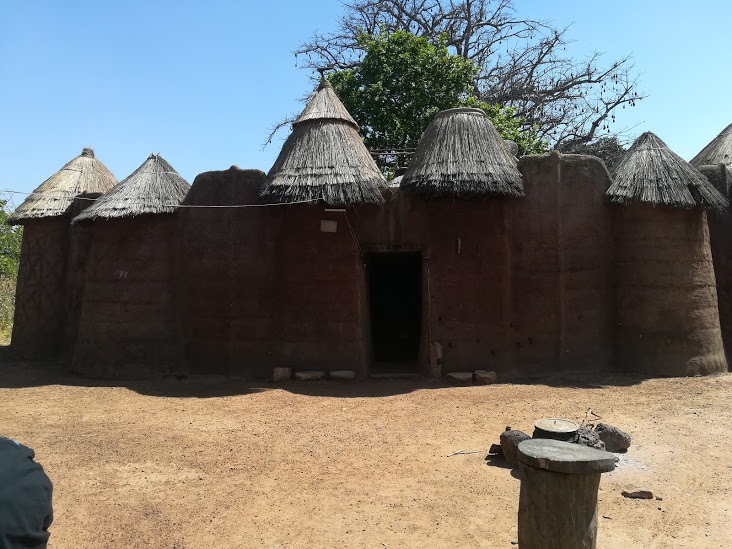
Zomaï Sacred Forest
At the heart of Ouidah, the Zomaï sacred forest is a living vodoun sanctuary, guarded by priests and dotted with altars beneath dense canopy. An authentic place of spirituality, accessible only with a guide.
Deep in the heart of Ouidah, the Zomaï sacred forest stands as one of the most protected ritual spaces in Bénin's vodoun tradition. Dense and shadowed, guarded by priests, it shelters altars and spirits that only the initiated can fully approach. For the outside visitor, it offers rare contact with the city's living spirituality, far from tourist recreations.
Quick practical info
- Access: in central Ouidah, walkable from the Slave Route and Chacha Square.
- Entry: paid admission; a local guide or site guardian must accompany visitors.
- Dress code: modest clothing required; certain areas are off-limits to the uninitiated.
- Suggested duration: 30 to 45 minutes.
What to see
The forest forms a pocket of dense vegetation in an urban setting. Beneath the canopy of century-old trees lie vodoun altars, statues, and offerings left by the faithful. The atmosphere is quiet, charged with presence. The spirits — vodoun — associated with the place are honored during regular ceremonies, especially around the Vodoun Festival in January.
History and context
Zomaï roughly means "where light does not enter" in Fon, a direct reference to the protective darkness of the canopy. The forest is tied to Ouidah's spiritual history, once the religious capital of the Dahomey kingdom. It survived the colonial period undestroyed, testament to local communities' attachment to this sanctuary.
Highlights of your visit
Altars beneath the trees
Terracotta sculptures, pottery, and offerings mark points of worship. Each altar corresponds to a particular vodoun. Your guide will explain the functions and taboos associated with each.
The soundscape and sensory experience
The contrast with Ouidah's bustle is immediate. Bird calls, the scent of incense and damp earth, filtered light: the forest acts as a threshold between the ordinary world and the realm of spirits.
Etiquette and visiting rules
- Never enter without a guide or companion designated by the site guardians.
- Certain areas are strictly reserved for the initiated: respect the marked boundaries.
- Avoid loud or inappropriate gestures; the place is actively used for religious practice.
- Always ask permission before photographing altars or people.
- Modest, covered clothing recommended; avoid bright colors.
Photography tips
Light filtering through the canopy is beautiful in mid-morning. Altars and offerings should only be photographed with explicit guide approval. Favor wide shots of the vegetation over close-ups of ritual objects.
Location and access
Zomaï forest is located in central Ouidah, a few minutes' walk from Chacha Square and the Ouidah History Museum. Ouidah is connected to Cotonou by paved road; the journey by taxi or zémidjan (motorcycle taxi) from Cotonou takes roughly an hour.
Nearby attractions
- Slave Route — historic pathway linking Ouidah to the sea, dotted with memorial monuments.
- Python Temple — vodoun sanctuary where royal pythons live under supervised freedom.
- Gate of No Return — monument erected on the beach in memory of enslaved people transported abroad.
- Ouidah History Museum — housed in the former Portuguese fort, traces the history of the Dahomey kingdom and the slave trade.
Frequently asked questions
No. Access is conditional on the presence of a guide or guardian designated by site authorities. This is both a safety and religious respect requirement.
It is generally accessible throughout the year, but certain ceremonial periods may restrict access to the uninitiated. Check with your local agency before planning your visit.
Photography is possible in certain areas, only with guide approval. Altars and ritual objects are often off-limits for cameras.
The dry season (November to March) offers the best visiting conditions. The National Vodoun Festival on January 10th is a particularly intense time in Ouidah.
Yes. The Slave Route, Python Temple, History Museum, and Gate of No Return are all accessible on foot or by motorcycle taxi in a single day.
Interested in this visit?
We can include it in your personalised itinerary.