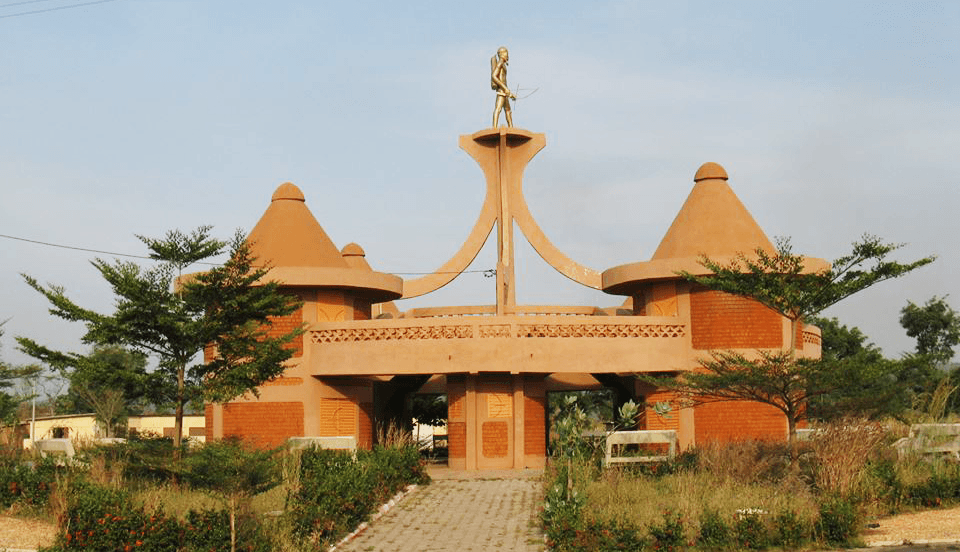
Atakora and the Betammaribé Country
A chain of hills in northwestern Bénin where the Betammaribé people live in their tata, earthen fortress-houses with upper stories, following the rhythm of markets held every four days.
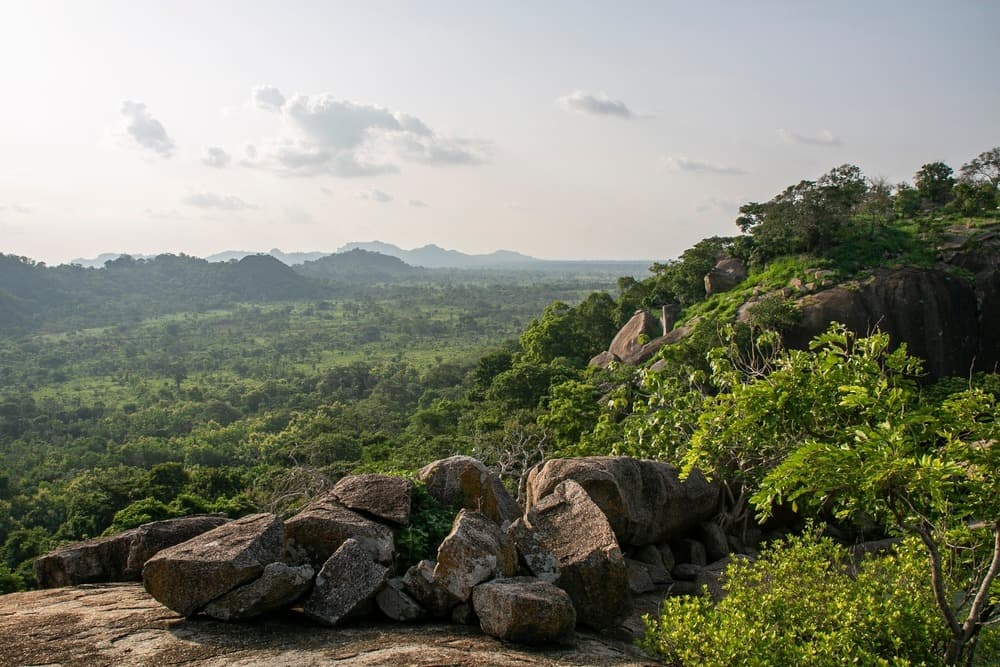
Atakora is the chain of hills that defines the northwestern landscape of Bénin, stretching from Natitingou to the Togolese border at Boukoumbé. The peaks remain modest, around 600 to 658 meters high, yet the altitude is enough to shift the climate and shape a landscape of laterite ridges, seasonal watercourses, and villages scattered across the hillsides. Our team based in Cotonou travels there regularly: expect a full day's drive from the capital, or a domestic flight to Natitingou when the schedule permits.
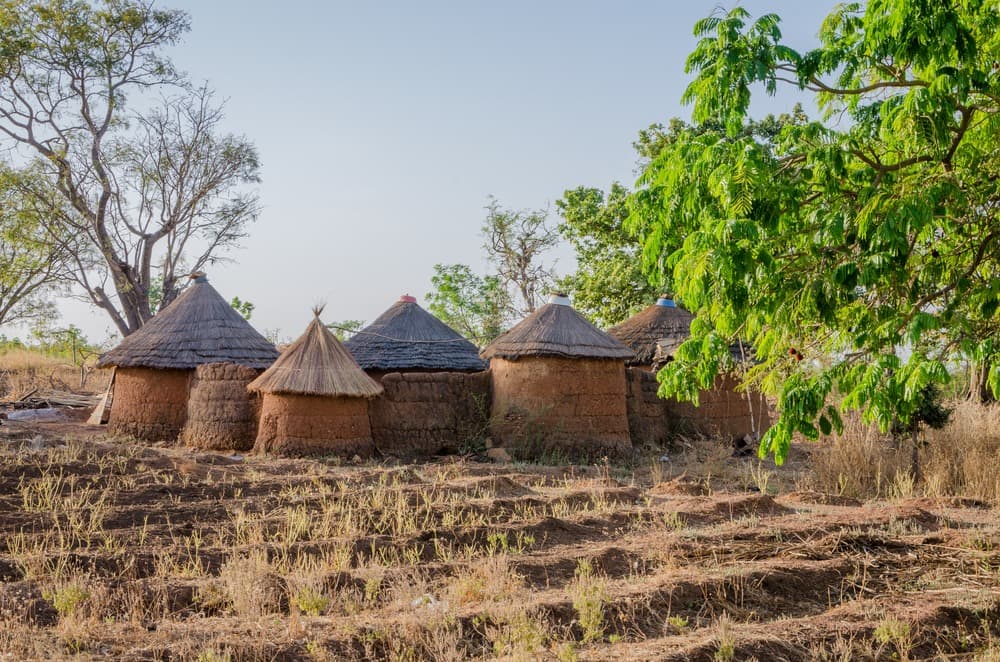
The region is first and foremost the territory of the Betammaribé, sometimes called Somba by their neighbors. This people have built their identity around the tata, a multi-story earthen fortress-house whose design combines dwelling, granary, altar, and defensive system. The ground floor shelters small livestock and the kitchen, the terrace serves as living space and drying area, and the turrets function as storage for millet and sorghum. The Somba tata are on UNESCO's indicative list and remain inhabited, which changes everything: you are not visiting a museum but entering homes where families continue to live according to a precise ritual calendar.
Around Natitingou, the administrative hub and only city in the area, the territory reveals itself through its villages: Koussoukoingou perched on a sandstone plateau, Koubetti, Tipéti, Kotopounga with its waterfalls, Tanougou and its 25-meter waterfall at the foot of the massif. Boukoumbé, about fifty kilometers southwest of Natitingou by partly paved track, concentrates the region's agricultural activity and most vibrant market. Markets rotate on a four-day cycle, which shapes movement patterns: Boukoumbé one day, Koussoukoingou another, Manta or Korontière the following days. For travelers, these are prime moments to observe the exchanges between Fulani herders and Betammaribé farmers.
The economy remains agricultural and subsistence-based: millet, sorghum, fonio, yam, peanut, and a local millet beer, tchoukoutou, brewed by women and consumed in village taverns. Food centers heavily on fonio, millet paste, and sauces made from baobab leaves or peanuts. The Betammaribé practice their own religious system, centered on family altars placed before each tata, initiation ceremonies called difang for young men, and a highly codified relationship with the realm of ancestors. This ritual dimension remains living practice and is not staged for visitors: you need a local guide to understand what you see.
Atakora extends naturally northward into Pendjari National Park, whose entrance at Batia lies about two hours from Natitingou. This geographical continuity explains why most of our circuits in northern Bénin combine both zones: alternating inhabited villages and wooded savanna, cultural encounters and wildlife observation. To the west, the Togolese border is very close, and the Tamberma country on the Togolese side perpetuates the same architectural culture, opening cross-border extensions for travelers with time to spare.
To Discover
Night with a family in Koussoukoingou. A designated village perched at 500 meters, where we arrange stays with families whose tata remains actively inhabited. Evening around the hearth, tasting of tchoukoutou and explanation of the altars by the household head.
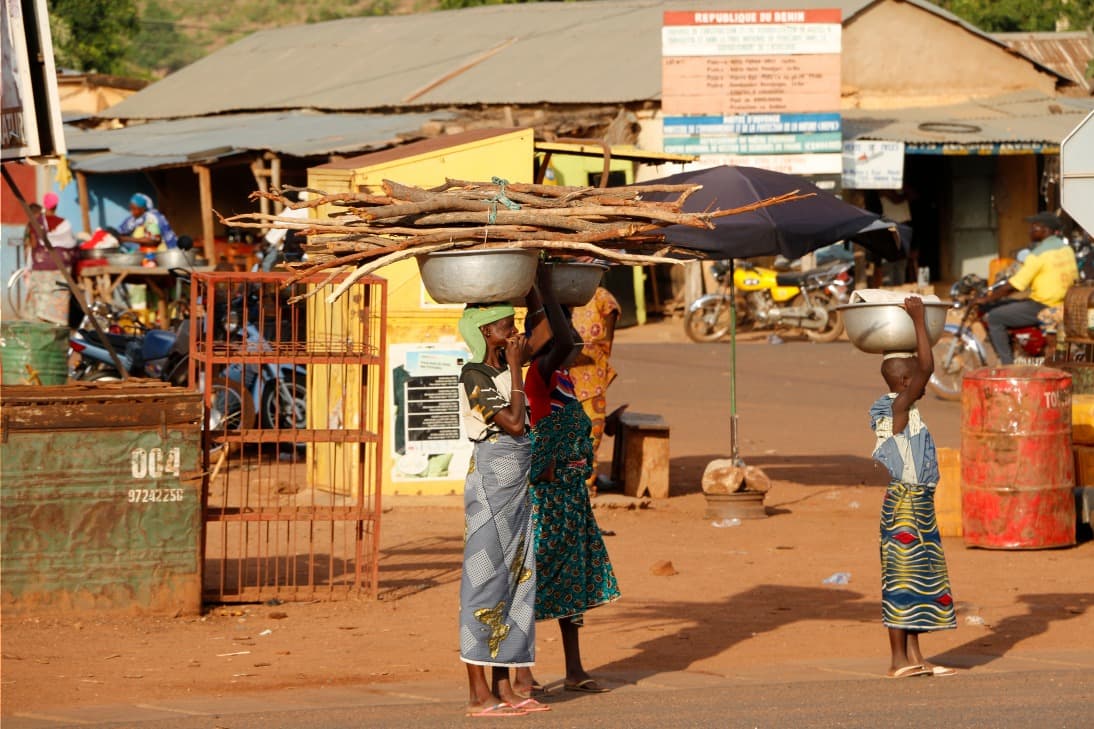
Boukoumbé Rotating Market. Every four days, the market brings together Betammaribé, Fulani, and traders from Togo. Millet, gourds, fabrics, and livestock change hands, offering a chance to observe traditional hairstyles and scarification still worn by elders.
Tanougou Waterfall. About a 25-meter drop at the foot of Atakora, reached by a short walk from the Pendjari road. Swimmable pool in the dry season, much stronger flow from July to September.
Hiking Between the Tata. Three to five hour walk between Koussoukoingou, Koubetti, and neighboring hamlets along ridge paths. You cross millet fields, stone altars, and isolated compounds, accompanied by a Betammaribé guide who opens doors along the way.
Difoani Ceremony. Depending on the season, possibility of witnessing an initiation or funeral ceremony, with dancing to the sound of flutes and drums. These events cannot be planned in advance; we alert travelers when our local network informs us.
When to Visit
The dry season from November to March remains the most comfortable window. The harmattan blows from December to February, bringing hazy skies and cool nights: temperatures drop to around 15 to 17 degrees Celsius at elevation, against 32 to 35 degrees during the day. March and April mark the pre-monsoon period, with temperatures exceeding 38 degrees and heavy air, uncomfortable for walking between villages.
The rainy season runs from May to October, peaking in August and September when 200 to 300 mm can fall monthly. Secondary tracks to Koussoukoingou or Korontière become difficult, some fords become impassable, and Pendjari officially closes. In exchange, the landscape turns green, the Tanougou and Kota waterfalls flow at full force, and October offers a brief interesting window before the dry season with fewer visitors.
Practical Advice
We recommend a minimum of two nights on-site, three if you want to combine the rotating market, hiking between tata, and a night with a local family. The logistical entry point is Natitingou, reachable by road from Cotonou in two days via Dassa and Djougou, or in one long day. Domestic flights exist occasionally and we integrate them when timing allows. Accommodation ranges from basic village campsites to a few decent hotels in Natitingou, with no luxury category.
The most coherent combination remains Atakora plus Pendjari Park, dedicating five to seven days to the entire north. For a complete country circuit, we articulate Atakora with the Abomey plateau for its royal dimension, the central hills for transition, and the coast and lagoons for the history of the slave trade and Vodou. The region suits travelers interested in anthropology, vernacular architecture, and hiking through inhabited country. It is less suitable for families with very young children or travelers seeking superior hotel comfort.