Abomey Plateau
Former capital of the Dahomey kingdom, Abomey Plateau retains its UNESCO palaces, workshops of appliqué artists and blacksmiths, and active vodun convents.
The Abomey Plateau extends across the laterite lands of southern Bénin, 140 kilometres north of Cotonou by the Bohicon road. We drive our travellers there in two and a half hours from the coast, climbing toward a landscape of wooded savanna dotted with oil palms, mango trees, and kapoks. The altitude remains modest, around 220 metres, but the air is noticeably drier than in Cotonou, especially between December and February, when the harmattan brings warm dust from the Sahel.
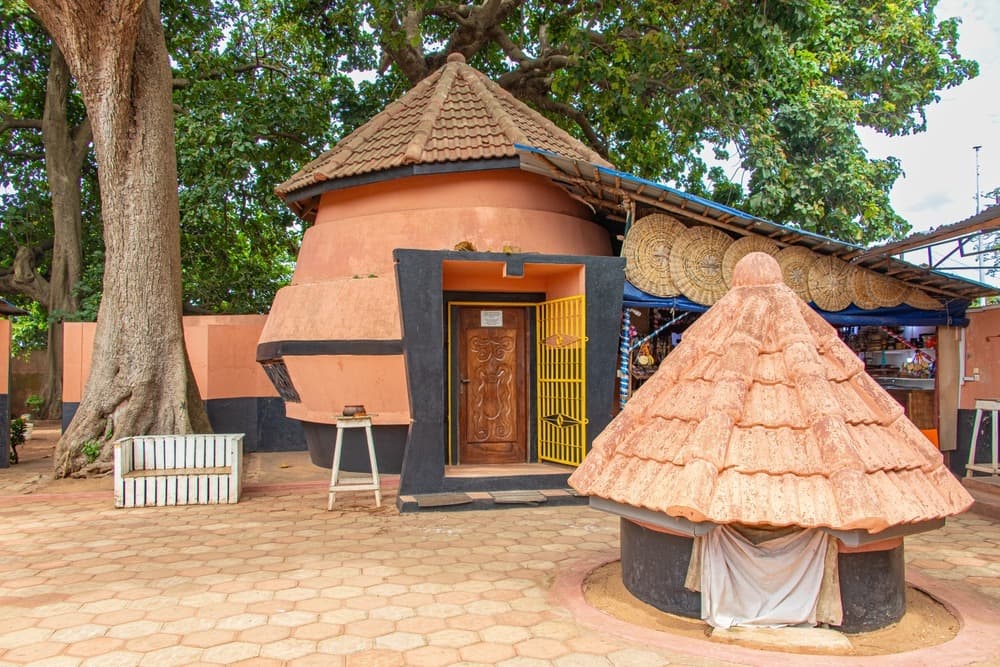
Abomey was the capital of the Dahomey kingdom from the 17th century until its fall in 1894 to the troops of General Dodds. Twelve Fon kings succeeded one another, from Houégbadja to Béhanzin, each having built his own banco palace within an enclosure that covered 44 hectares. Today, the palaces of Ghézo and Glélé, listed as UNESCO World Heritage since 1985, house the Historical Museum of Abomey. Here you can see the polychrome bas-reliefs depicting wars and royal emblems, King Ghézo's throne resting on four enemy skulls, and the appliqué hangings that were a court monopoly. The visit, which we arrange with a guide trained by the museum, takes approximately two hours.
But the plateau is far more than its palaces. Bohicon, eight kilometres to the south, is the economic hub of the zone, with its railway station from the former Bénin-Niger line and its large market of fresh produce. It is also the land of craftspeople who are heirs to the court tradition: the blacksmiths of the Houndjro quarter still work iron using techniques passed down from royal sabres, weavers produce kente cloth on narrow-band looms, and appliqué artist families in the Hountondji quarter continue to sew the symbolic flags of each king. We organise direct encounters in these workshops, which are often the most memorable moment of the stay for our travellers.
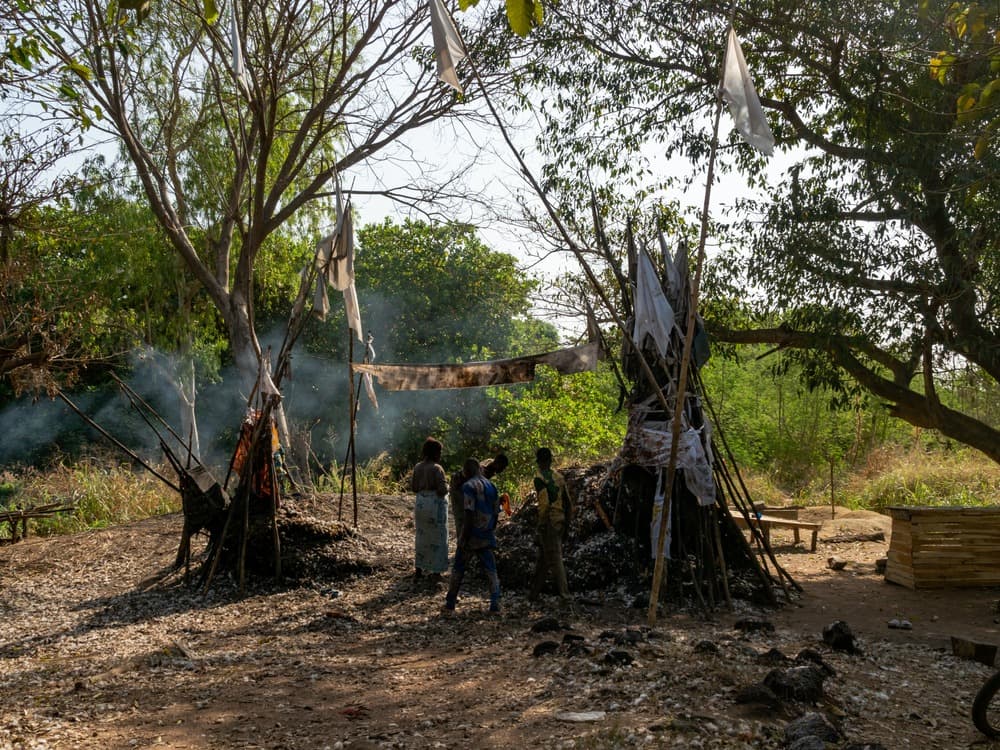
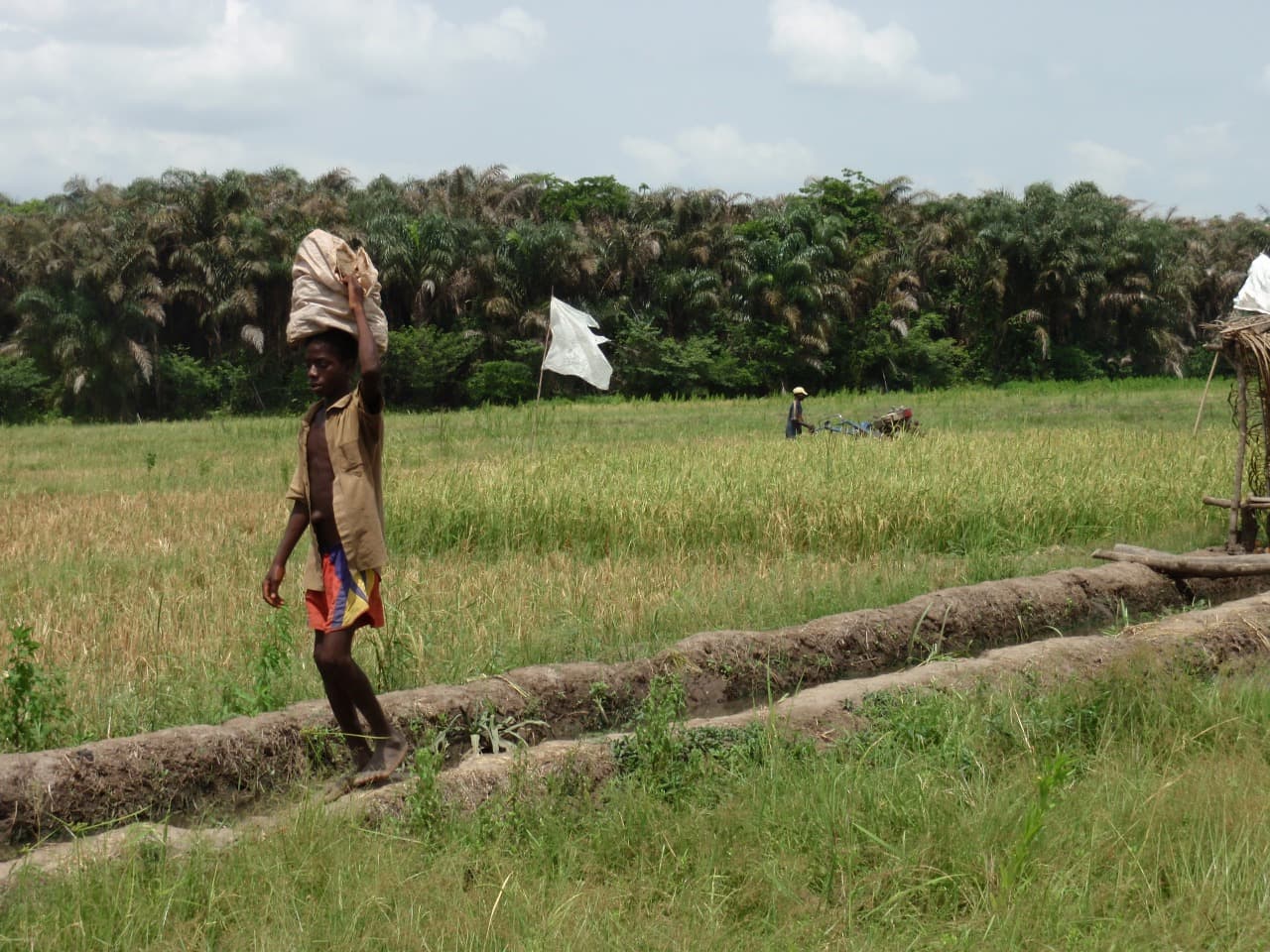
The plateau is the cradle of Fon culture and vodun spirituality, which is not a folkloric curiosity but a daily practice. The vodun convents in the Abomey, Cana, and Zagnanado regions still initiate adherents, and celebrations of divinities punctuate the calendar. At Cana, 12 kilometres to the east, stands the royal summer palace, less visited but where one better understands the territorial organisation of the kingdom. The Couffo river, which borders the plateau to the west, feeds agriculture of maize, cassava, and yam that remains the dominant way of life outside the towns.
As for cuisine, the plateau is that of amiwo, a paste of red maize cooked with tomato and chilli, served with braised chicken or smoked fish. Wagasi, a Fulani cheese sold in orange balls at the markets, often accompanies the sauces. The Houndjro market of Abomey is held every four days according to the traditional calendar, and it is best to plan it into your programme: this is where producers from the villages of Djidja, Agbangnizoun, and Zogbodomey converge, and you will find the ingredients of vodun—roots, gourds, pottery—alongside tomatoes and onions.
The Abomey Plateau is the stage that gives historical depth to a journey through Bénin. Without it, one cannot understand the political organisation that enabled the Atlantic slave trade from Ouidah, nor the resistance that preceded colonisation, nor the current vitality of vodun cults. It is also a region fully rooted in the present, where craftsmanship is not a reconstruction but a living profession.
To Discover
Royal Palaces of Abomey. The banco enclosures of Kings Ghézo and Glélé, with their polychrome bas-reliefs recounting the wars of Dahomey and the throne room of the museum. Allow two hours with a guide trained on site.
Workshops of Hountondji and Houndjro. Families of appliqué artists sew the symbolic flags of the twelve kings, blacksmiths still hammer iron using techniques inherited from court weapons. Visits possible in family workshops.
Houndjro Market every four days. The great gathering place of plateau villages, where vodun ingredients sit alongside tomato sauces and balls of Fulani wagasi cheese. To be scheduled according to the traditional calendar.
Palace of Cana and Zagnanado region. Twelve kilometres east of Abomey, the summer residence of the Fon kings and still-active vodun convents, far from the usual circuits. A territorial reading of the kingdom.
Cuisine of the Plateau. Amiwo, a paste of red maize cooked with tomato and chilli, served with braised chicken or fish from the Couffo. We organise lunch at local homes in Bohicon.
When to Go
We recommend the period from November to February to visit the Abomey Plateau. It is the dry season, with temperatures of 24°C at night and 33°C during the day, and the harmattan that cools the evenings whilst charging the air with dust. Visibility on the bas-reliefs of the palaces is better, and the tracks to the artisan villages remain easily passable.
The major rainy season extends from mid-March to mid-July, with rainfall exceeding 150 millimetres in June. Showers are brief but intense, especially late in the afternoon, and some secondary tracks become muddy. A smaller rainy season returns in September-October. We avoid scheduling the plateau in June, not because of the rain itself but because of the ambient humidity that makes visits uncomfortable. By contrast, July-August remain feasible, with frequent breaks in the rain and very green vegetation.
Practical Advice
Two days and one night on site are sufficient to seriously visit the palaces, meet two or three artisan families, and include Cana or a vodun convent. For those who wish to take time for the markets and surrounding villages, three days provide real breathing space. The logistical entry point remains Cotonou airport, from where we arrange transfers by the paved RNIE2 road, in two and a half hours. Accommodation in Abomey and Bohicon is in simple to mid-range guesthouses and hotels, clean and welcoming but without luxury: this is a cultural stage, not a leisure destination.
The Abomey Plateau naturally connects with the Coast and Lagoons for the historical sequence Ouidah-Abomey, which traces the Atlantic slave trade and the kingdom that fed it. To the north, it opens the road to the Hills and centre then to Atakora and Betammaribé country, six hours' drive away, for travellers who venture as far as Pendjari Park. This region appeals to travellers curious about history, spirituality, and living craftsmanship, rather than those seeking spectacular landscapes or wildlife.