Museum of Art and Popular Traditions of Porto-Novo
Housed in a former 19th-century Yoruba royal palace, this Porto-Novo museum brings together egungun masks, vodoun ritual objects and royal regalia — a rich panorama of Benin's cultural traditions.
Set within a 19th-century Yoruba royal palace, the Museum of Art and Popular Traditions of Porto-Novo holds one of the most representative collections of Benin's cultures. Masks, ritual costumes, musical instruments and everyday objects tell the stories of vodoun practices, Gun royalty and the country's artisanal traditions. It is one of the rare museums in the country housed in a classified historic building.
Quick practical information
- Admission: fee-based (modest rate, bring local currency)
- Recommended duration: 1 to 1.5 hours
- Dress code: respectful attire recommended; some ritual objects are sensitive
- Access: Porto-Novo city centre, reachable by zémidjan (motorcycle taxi) from the bus station
What to see
The collections span several domains of traditional Beninese life. You will find egungun masks used in ancestor ceremonies, vodoun deity statuettes, royal regalia and traditional musical instruments. Explanatory panels contextualise each piece within its ritual or social use.
The building's architecture itself deserves attention: the inner courtyard, columned galleries and sculpted façade details bear witness to Yoruba palatial style adapted to colonial influences.
History and context
Porto-Novo was the capital of the Gun kingdom before becoming the seat of the French protectorate. The building housing the museum served as a royal residence, then was repurposed for administrative functions before being transformed into a museum space. This trajectory makes it a dual testament: to the collections on display and to the building itself.
The city remains Benin's official capital, though Cotonou concentrates economic functions. This status has allowed it to preserve a dense architectural and cultural heritage, of which this museum is one of the key anchors.
Highlights of the visit
The egungun masks
These full-body costumes, worn during ceremonies marking the return of ancestors, are among the most striking pieces. Their polychrome decoration and the diversity of materials used — fabrics, raffia, beads — illustrate a craft passed down through generations.
Vodoun ritual objects
Fetishes, miniature altars and statuettes associated with various deities (orisha, vodoun) form a coherent ensemble. The labels explain each object's function without diminishing its symbolic complexity.
The palace architecture
The central courtyard and galleries reveal the spatial organisation of a Yoruba royal residence. The details of carved doors and friezes reward close observation.
Photography tips
Natural light in the inner courtyard is best in mid-morning. Inside the halls, artificial lighting is limited: a camera capable of high ISO sensitivity proves useful. Check with the custodian before photographing ritual objects — some may be subject to restrictions.
Location and access
The museum is located in Porto-Novo's historic centre, near the Great Mosque of Porto-Novo and the Honmè royal palace. Zémidjans (motorcycle taxis) are the most practical transport from anywhere in the city. Porto-Novo is connected to Cotonou by a paved road of about 30 km, served by shared minibuses.
In the vicinity
- Honmè royal palace — another historic palace in Porto-Novo, dedicated to Gun royalty, within walking distance.
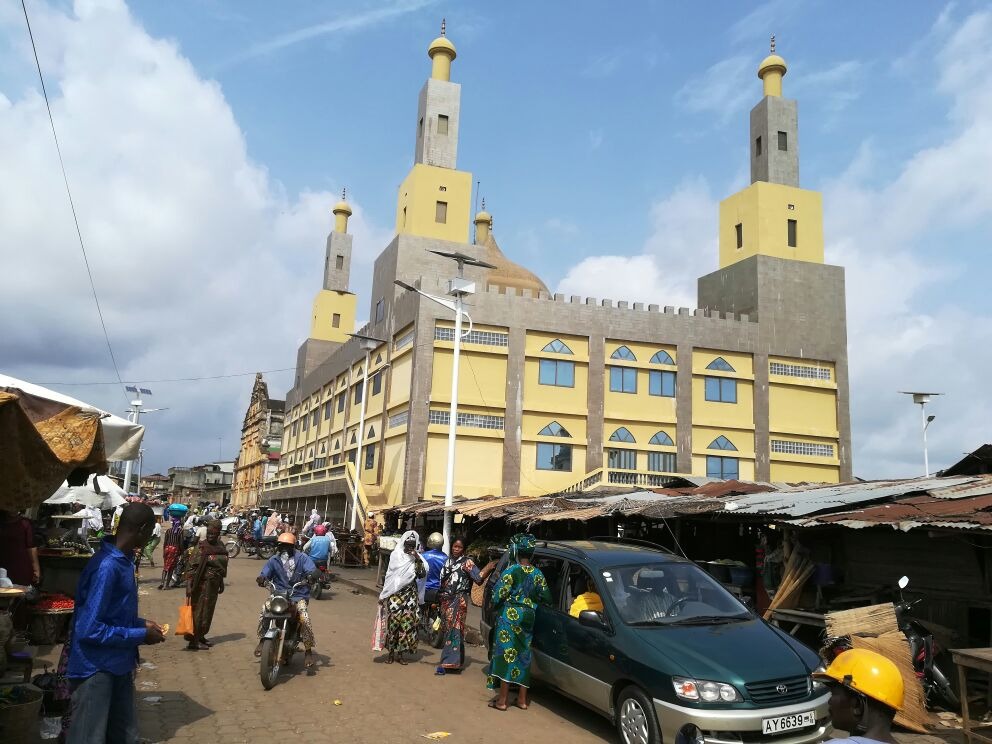
- Great Mosque of Porto-Novo — a remarkable edifice blending Brazilian and Islamic architecture, in the same neighbourhood.
- Silva Museum — private museum dedicated to the Afro-Brazilian community returned to Benin, in Porto-Novo.
- Porto-Novo Market — large central market supplying artisans and merchants across the region.
Frequently asked questions
Free admission does not require advance booking. For guidance by a local guide, it is best to enquire on-site or through a local agency in Porto-Novo.
Photography is generally permitted in common spaces and the courtyard. Some ritual objects may be subject to restrictions: ask the staff before photographing.
Yes. The Honmè royal palace, the Great Mosque and the Silva Museum are all within walking distance or a short zémidjan ride from the museum. One day is enough to cover the main sites of the historic centre.
The dry season (November to March) is the most comfortable for visiting Porto-Novo. The museum is accessible year-round, but heavy rains during the rainy season can complicate getting around the city.
Guides may be available on-site depending on the day. For an in-depth visit with interpretation of ritual objects, it is advisable to contact a local heritage-focused agency in advance.
Interested in this visit?
We can include it in your personalised itinerary.