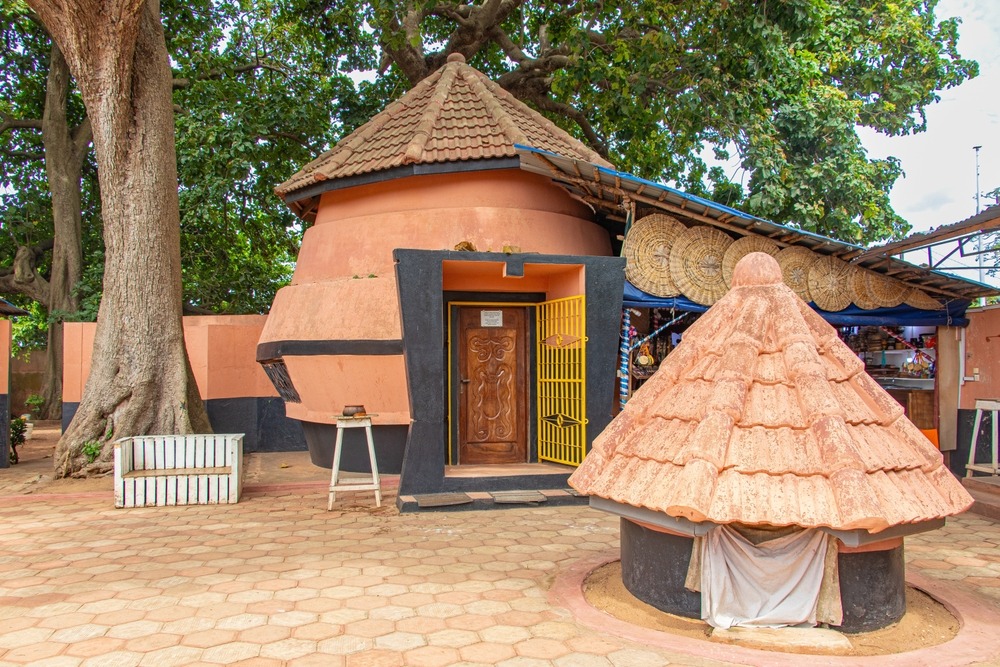
Museum of Arts and Popular Traditions of Atakora
In Natitingou, this museum brings together costumes, tools and ritual objects from the peoples of Atakora — the Bétamaribé foremost among them — to tell the story of a mountain culture still living in the surrounding villages.
Located in Natitingou, capital of the Atakora region, this museum gathers the objects, costumes and tools that tell the daily and ritual life of the peoples of northwestern Benin — Bétamaribé, Yom, Waaba and their neighbours. It is one of the rare museum spaces in the country to showcase the mountain cultures of Atakora, often overshadowed by the vodou traditions of the south.
What to See
The collections cover several aspects of traditional life:
- Ritual objects and fetishes linked to the animist practices of local communities.
- Costumes and adornments worn during initiation ceremonies and agricultural festivals.
- Agricultural and hunting tools illustrating the subsistence methods of the region.
- Pottery and basketry crafted using techniques passed down through generations.
- Traditional musical instruments, including drums and flutes still in use in the surrounding villages.
History and Context
Atakora is one of Benin's most culturally preserved regions. The Bétamaribé, builders of the celebrated Somba tatas (fortress-houses), developed a complex social and spiritual organization. This museum was created to document and transmit this intangible heritage, threatened by rural exodus and the rapid social changes of the twentieth century.
Highlights of Your Visit
Initiation Objects
Certain pieces are directly linked to male and female rites of passage. Their presence in a public space is rare; the captions explain their role without revealing the ritual secrets still observed.
The Architecture Section
Models and photographs illustrate the construction of Somba tatas, these earthen multi-storey dwellings that serve simultaneously as granary, barn and living space. An excellent introduction before visiting the villages of the region.
The Textile Collections
Woven cloths, ceremonial headdresses and jewellery in metal or beads testify to an artisanal skill that remains alive in certain villages of Atakora.
Photography Tips
Natural light is often limited indoors. Favour a camera or smartphone with good low-light performance. Always ask permission before photographing ritual objects — some may be subject to restrictions.
Location and Access
The museum is located in Natitingou, accessible from Cotonou via the national highway (approximately 500 km, a long journey by bus or car). Natitingou is the main departure point for exploring Atakora: the Somba villages, Pendjari Park and the surrounding hills are all accessible from the city. Local agencies offer circuits combining a museum visit and excursions to traditional villages.
Nearby
- Somba tatas — the earthen fortress-houses of the Bétamaribé, to be visited in the villages around Natitingou.
- Pendjari National Park — one of the best-preserved wildlife reserves in West Africa, a few hours' drive away.
- Village of Koussoukoingou — an emblematic Somba village, often cited as the most accessible for discovering traditional architecture.
Frequently asked questions
The dry season (November to March) is the most comfortable for travelling in Atakora. Roads are passable and the heat remains manageable at altitude.
A local guide is highly recommended. The captions are sometimes sparse, and a knowledgeable guide allows you to understand the cultural context of the displayed objects, particularly ritual pieces.
Yes, it's even advisable. The museum provides useful background before visiting the villages; seeing them in person subsequently gives meaning to the objects viewed in the collection.
Check at the entrance. Some ritual objects may be subject to photography restrictions; it's best to ask before taking pictures.
Allow between one and one-and-a-half hours to browse the collections at a leisurely pace, longer if accompanied by a guide who comments on each section.
Interested in this visit?
We can include it in your personalised itinerary.