Koussoucoingou
Koussoucoingou
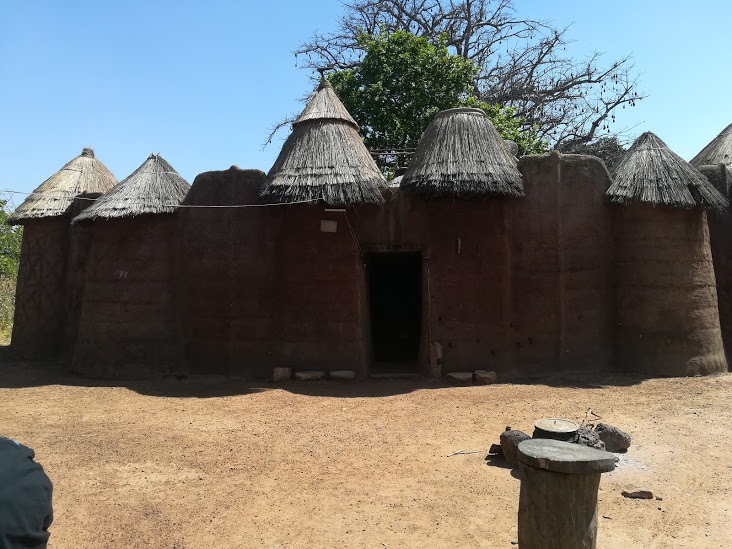
Just outside Boukoumbé, Koussoucoingou is home to inhabited Somba tatas—those fortress-like mud brick dwellings with turrets, iconic symbols of Bètammaribè architecture in the Atakora region.
Koussoucoingou is a village perched in the hills of Atakora, just outside Boukoumbé in northwestern Bénin. It is known for its Somba tatas—fortress-like mud brick dwellings with turrets that the Bètammaribè people have built for centuries. Here, vernacular architecture is not a museum piece: families still live in these structures, and a visit feels as much like an encounter as it does a cultural discovery.
Essential Information at a Glance
- Access: track from Boukoumbé, 4×4 vehicle recommended during rainy season
- Local guide: strongly advised for entry to compounds and understanding local customs
- Dress code: respectful attire required; always ask permission before photographing
- Suggested duration: half-day to full day depending on number of compounds visited
What You'll See
The landscape is dominated by Somba tatas: two-storey structures of rammed earth flanked by cylindrical granaries topped with thatch. Each tata is a self-contained unit—living space, crop storage, and animal enclosure—designed to withstand raids. Thick walls, narrow openings, and flat roofs tell a story of defensive architecture thought through in meticulous detail.
History and Context
The Bètammaribè (also called Somba) developed this architectural style to protect themselves from slave raids in the 17th and 18th centuries. The term "Somba" refers to both the people and their architecture. The ensemble of tatas in the Boukoumbé-Natitingou region appears on UNESCO's indicative heritage list, recognized for its exceptional architectural and cultural value.
Highlights of Your Visit
Inside a Compound
With a guide and the family's permission, it is possible to enter a tata. The interior layout—low-ceilinged rooms, stone staircases, central terraces—reveals a sophisticated spatial logic adapted to the climate and daily rituals.
The Millet Granaries
The cylindrical granaries topped with straw hats are the most photographed elements. Their shape and placement vary according to family status and local animist beliefs.
The Atakora Landscape
The wooded hills surrounding Koussoucoingou create a striking visual backdrop. In the dry season, the low morning light brings out the texture of ochre earth against the green of the trees.
Etiquette and Visiting Rules
- Never enter a compound without an invitation or without being accompanied by a guide.
- Always ask permission before photographing residents, particularly women and children.
- Certain areas of the tatas have ritual functions: respect your guide's instructions on which spaces are accessible.
- A small gesture of courtesy (kola nuts, a symbolic contribution) is appreciated by families who open their doors.
Photography Tips
Early morning light, between 7 a.m. and 9 a.m., is ideal: it sculpts the turrets and warms the ochre earth. Aim for a slightly elevated angle from the surrounding hills to capture an entire compound. Avoid using flash inside the tatas, as locals often find it disruptive.
Location and Access
Koussoucoingou lies in the Boukoumbé municipality, in the Atakora department. The city of Natitingou, the regional capital, is the logical departure point for organizing your visit. The track connecting Boukoumbé to the village is passable by 4×4; during rainy season (June-September), conditions can deteriorate quickly. A guide based in Natitingou or Boukoumbé will facilitate access and introductions to families.
Nearby Attractions
- Natitingou—an essential stopover town in Atakora, with its regional museum dedicated to local cultures.
- Somba Tatas of Boukoumbé—other compounds accessible directly from Boukoumbé town center.
- Pendjari National Park—Bénin's major wildlife reserve, easily combined with a stay in Atakora.
Photos
Interested in this visit?
We can include it in your personalised itinerary.