The Tata, a Fortress Among the Somba
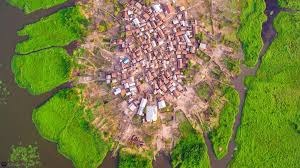
We are at the northwestern border between Benin and Togo. Welcome to the Somba people.
We are at the northwestern border between Benin and Togo. Welcome to the Somba people. The Somba form a collection of peoples established in the Atacora mountain range, which runs along the northwestern border of Benin and Togo. The Batammariba, found in Boukoumbé on the Benin side, neighbor the Tamberma on the other side in Togo. Both peoples belong to the Somba ethnic group and live in harmony despite the borders arbitrarily drawn by colonial powers. What captivates visitors among the Somba is the tata.
What is the Origin of the Somba?
The Batammariba and Tamberma originate from Burkina Faso in the 17th century, fleeing tribal wars and raids. They share the same culture and distinguish themselves through the distinctive architectural form of their dwellings, which commands admiration. The Somba live in Tatas. Hence the name Somba tatas.
What is a Tata and What are Its Characteristics?
The tata is a traditional dwelling inspired by a sacred baobab tree where the Somba took refuge when they arrived in Benin. The baobab had natural hollows and served as a hiding place for the first arrivals, who from high in the tree could both spot enemies from afar and remain safe from wild animals.
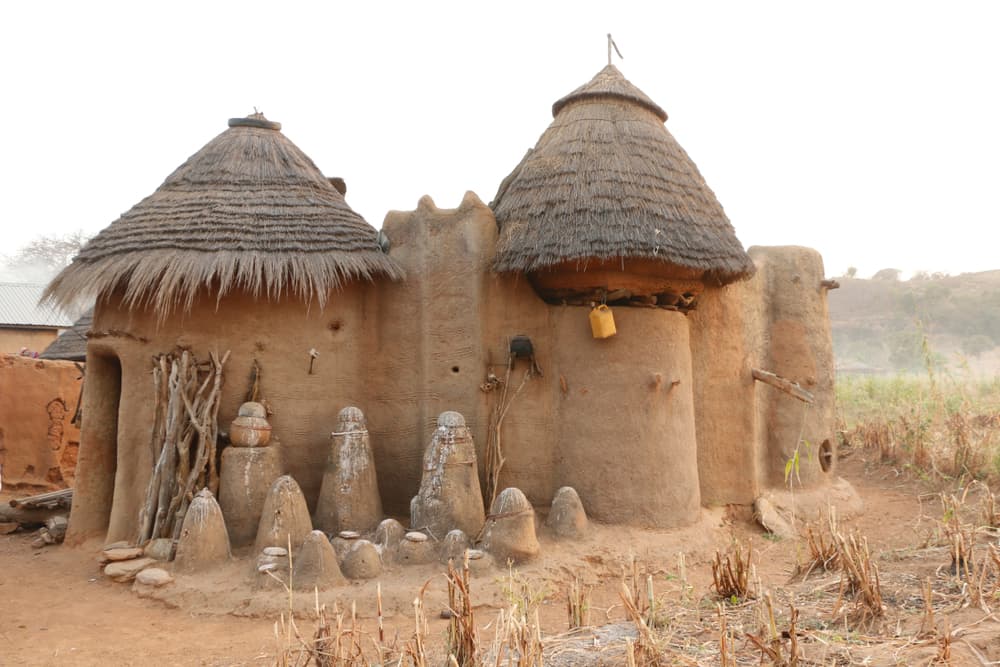
When they decided to build their dwellings, they constructed Takientas, which are impregnable fortresses. These are essentially round houses majestically built in the form of two-story homes.
The word tata itself comes from the diminutive of Takienta, which originally designates a fortification.
The Batammariba, whose name means those who "shape the sand" or the "builders," are renowned for constructing houses called tatas.
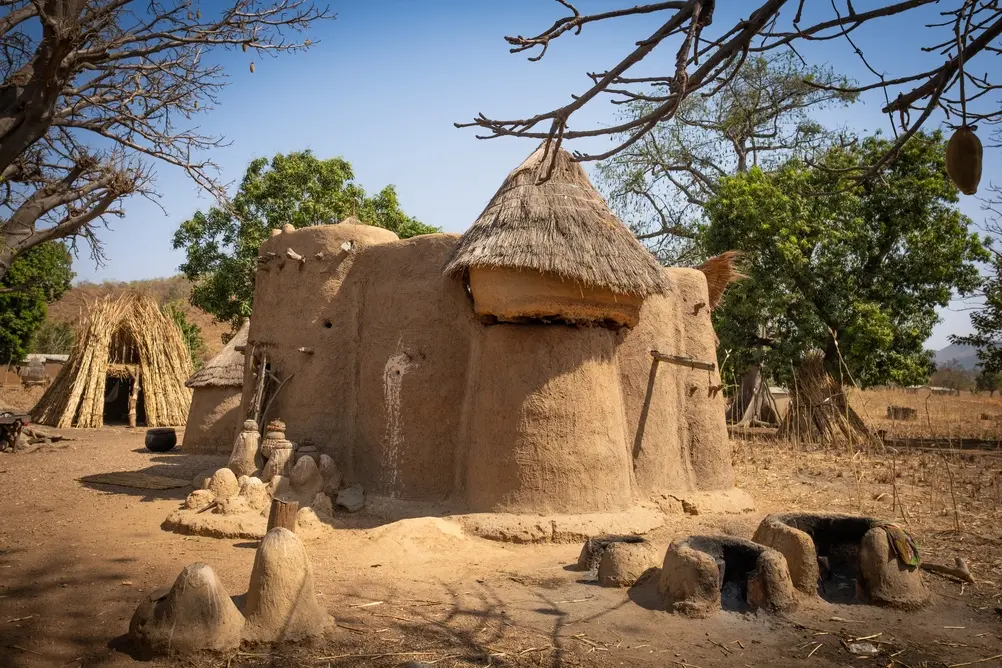
A tata is therefore a two-story house with a ground floor and an upper level. The upper level contains granaries and rooms. The tata features hidden spaces with small openings in the walls for defensive purposes. On the lower level is a hall where the elderly sleep, as well as domestic animals such as sheep, goats, and cattle.
This architectural form has terraces. They are paved and typically feature openings for ventilation as well as channels for water drainage. To enter the tata, one must stoop, as the entrance is intentionally small. Outside stand protective fetishes, which are also found at the entrance of the tata.
The Different Forms of Tata
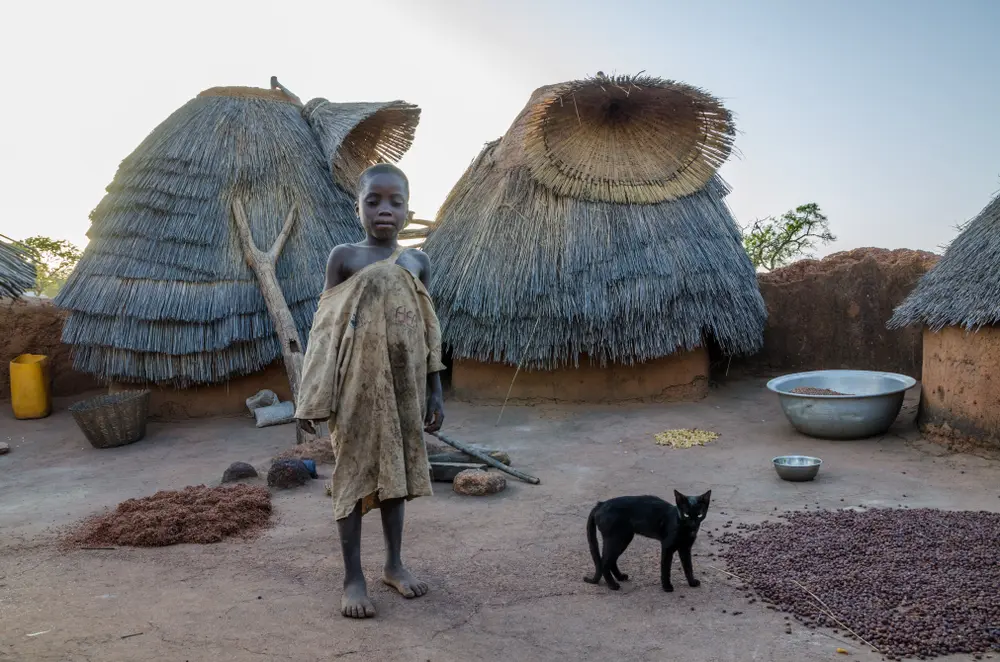
There are several types of tata depending on the locality.
The Natemba tata, found in Tayacou in the Tanguiéta district.
The Otammari tata, featuring three rooms on the upper level and seven granaries above.
The Otchao tata or Bètchabé tata is a variation of the original Otammari tata. Here, the upper level is paved and a ladder provides access to the small terrace. It is found in Boukoumbé.
The Ossori tata or tata of the Bèssoribé features a large terrace accessible by ladder. The upper level contains three rooms and four granaries.
The Berba tata is the only one that does not follow the construction characteristics of an authentic Somba tata. It has no upper story. A ladder is placed to cross the enclosure wall of the inner courtyard, around which nine rooms and two granaries are arranged.
In Togo, the Tamberma tata is listed as a UNESCO World Heritage site. The main concentration is found in the Koutammakou region, which means "where the sand is shaped." The tata is solid and resistant to the elements.
What is the Future of the Tata?
With urbanization and development, young people drawn to modernity are less inclined to build tatas. Certainly, there are still visible tatas in certain areas in northern Togo and Benin.
However, this form of traditional craftsmanship is today threatened with disappearance.
The governments of both countries, UNESCO, international organizations, and even village community associations work tirelessly to preserve this jewel that for so long served as a fortress for the Somba.
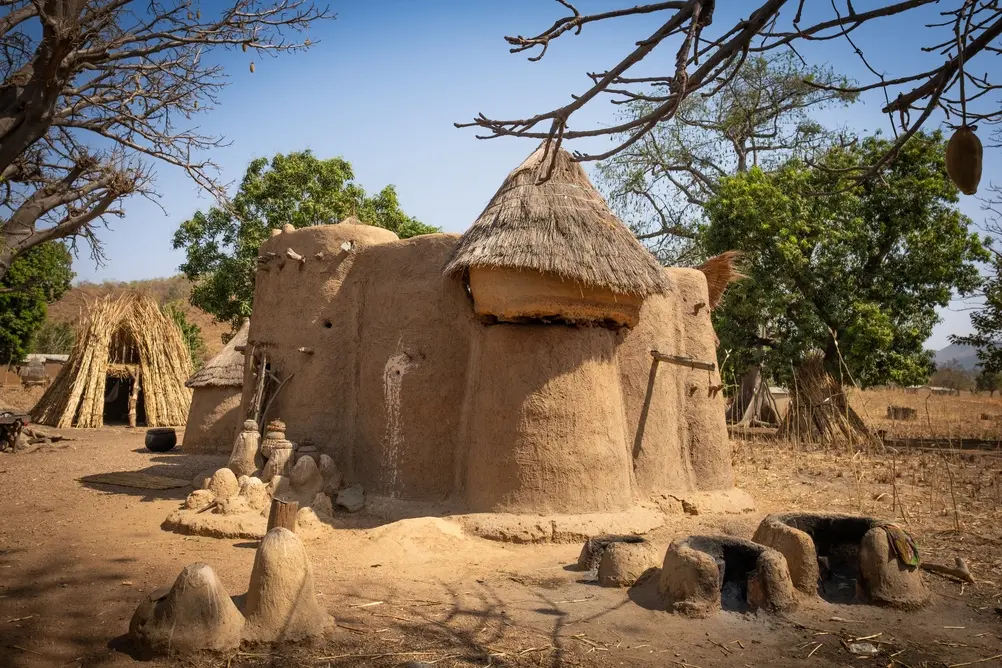
A journey to Benin or Togo without visiting a tata leaves you with a sense of incompleteness.
Frequently asked questions
A Somba tata is a traditional fortified dwelling constructed by the Batammariba and Tamberma peoples in the Atacora region, at the border between Benin and Togo. Inspired by a sacred baobab tree, it comprises a ground floor and an upper level with a terrace, granaries, and defensive hiding spaces.
In Benin, the main sites are located in Boukoumbé and in the Tanguiéta district (village of Tayacou). In Togo, the Koutammakou region, listed as a UNESCO World Heritage site, is home to numerous Tamberma tatas accessible to visitors.
The Koutammakou in Togo is listed as a UNESCO World Heritage site because it represents an exceptional example of living vernacular architecture, intimately linked to the traditions, beliefs, and way of life of the Tamberma peoples, and which has withstood the test of time.
There are several types of tata: the Natemba tata (in Tayacou), the Otammari tata (3 rooms on the upper level, 7 granaries), the Otchao or Bètchabé tata (in Boukoumbé), the Ossori or Bèssoribé tata (large terrace, 3 rooms and 4 granaries), and the Berba tata, the only one without an upper story.
Yes, this traditional architecture is threatened by modernization and the younger generations' lack of interest in this type of construction. Joint efforts by the governments of Benin and Togo, UNESCO, and local associations are underway to preserve this unique heritage.