Preschool and Primary Education
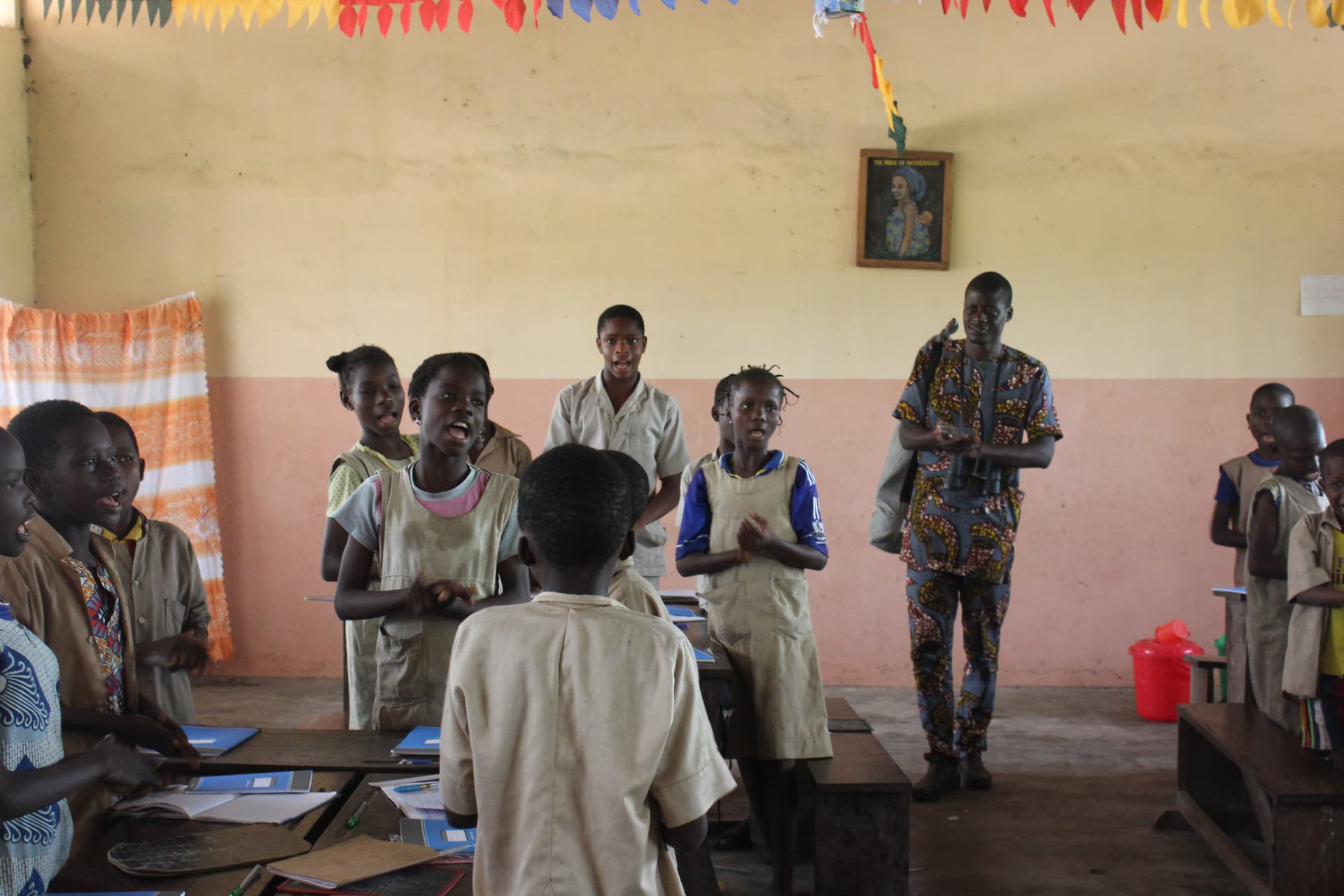
Once known as the Centre for Child Development and Stimulation (CESE), preschool today serves to prepare children for early learning. This includes children between two and a half to three years old for the younger section and three to five years old for the older section. This level of instruction prepares children for more structured, formal learning experiences to come. For primary education, children begin school at age five for a standard six-year curriculum. There are three levels within this structure. The first level comprises Initial Course (CI) and Preparatory Course (CP); the second level includes Elementary Course 1 (CE1) and Elementary Course 2 (CE2), while the third level covers Middle Course First Year (CM1) and Middle Course Second Year (CM2). The entire curriculum concludes with a diploma known as the Primary School Certificate (CEP). The history of Bénin's educational system has been turbulent. Consequently, pedagogical practices underwent modifications according to the political ideology implemented from the 1960s to the present day. Between 1960 and 1972, schools aimed to train technocrats, administrators, and civil servants. By 1972, this mission inherited from colonial education gave way to a cooperative school founded on productive, manual labor—including palm plantations, agricultural work, and sewing, among other activities. This heritage is notably reflected in the red star emblem, an iconic symbol of the country's economic capital, Cotonou. However, following the 1990 general assembly, the school system became liberal in nature, with the progressive introduction of the Competency-Based Approach (CBA) from 2001 onward. This approach centers the learner in the teaching-learning-evaluation process and extends through secondary education.