Irù wèrè: When Dassa-Zoumé Restores the Roof of the Sacred World
At the heart of Bénin, where granite formations defy the sky, the city of Dassa-Zoumé is set to vibrate to the rhythm of an age-old tradition. Iru Wéré,
At the heart of Bénin, where granite formations defy the sky, the city of Dassa-Zoumé is set to vibrate to the rhythm of an age-old tradition. Iru Wéré, a true pillar of Idaasha identity, is far more than a simple festivity; it is the unbreakable bond that unites the past with the present, the sacred with the social. This celebration draws its strength from the history of the Omondjagou ethnic group, the most important and prestigious in the kingdom.
The Historical Origins of Iru Wéré
Originating from Egba in Nigeria, the Omondjagou brought with them a warrior culture and profound spirituality that still infuses every stone of the city. Instituted originally by King Ogoudou in the ancient kingdom of Igbo Idaasha, this annual ceremony now stands as the most emblematic event of the region. From a cultural standpoint, Iru Wéré is an immersion into Idaasha metaphysics. The sacred character of the event is governed by a rigorous lunar calendar. Each year, it is in March that the magic unfolds. The precise date is never left to chance; it is identified by the high dignitaries of the kingdom who scrutinize the appearance of the moon and rely on purely spiritual criteria to signal the beginning of festivities. For this year's edition, the rendezvous is set for March 27 and 28, two days during which time seems to stand still.
A Rite of Filial Piety at the Heart of Iru Wéré
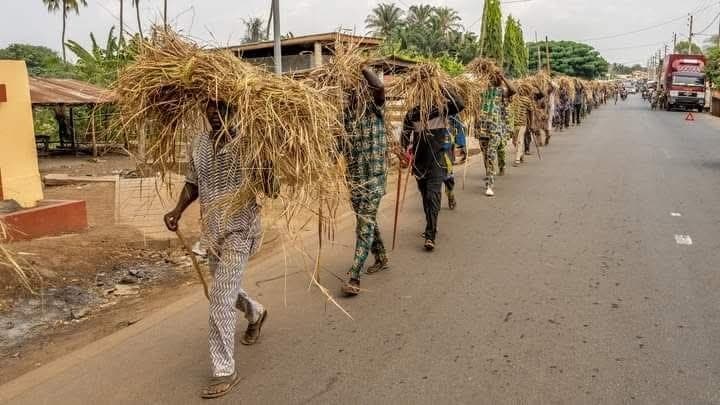
The very essence of Iru Wéré lies in a singular act of filial piety and a spirituality of lineage. This ceremony is exclusively reserved for fatherless orphans, princes and princesses of the kingdom, called to honor the memory of their deceased father. The rite consists in venturing into the sacred forest to extract specific reeds. These natural materials are then used to symbolically rebuild the roof of the paternal dwelling. Through this gesture, the orphan does more than restore a structure; they repair the invisible bond with their ancestors and reaffirm their place within the royal lineage of the Omondjagou.
From a cultural perspective, the effervescence that takes hold of Dassa-Zoumé is total. This major gathering transforms the crossroads city into an unparalleled center of attraction. It is estimated that participation now exceeds 50,000 people, including the diaspora and tourists. The city's occupancy rate approaches 100%, with hotels and residences fully booked weeks in advance. The main thoroughfares are overtaken by an immense crowd, creating a unique melting pot. It is a moment of reunion where nobility displays its splendor through garments chosen with intention. The colors and patterns of the traditional cloths must imperatively respect tradition, testifying to the richness of textile heritage. Faced with the scale of the event, administrative authorities mobilize to ensure optimal security. But beyond the ritual, Iru Wéré is an engine of growth. By attracting this influx of visitors, the event directly boosts restaurants, hospitality, transportation, and even the commercial sector. Valuing Iru Wéré means offering the city of 41 hills the means of its prosperity. Through this rite, Dassa-Zoumé proves that the spirituality of ancestors from Egba is the engine of sustainable tourism, capable of transforming the region into an essential hub of West Africa.
Frequently asked questions
Iru Wéré is an annual traditional ceremony in the city of Dassa-Zoumé in Bénin. Instituted by King Ogoudou in the ancient kingdom of Igbo Idaasha, it is reserved for fatherless orphans of the royal Omondjagou lineage, who symbolically reconstitute the roof of the paternal dwelling using reeds extracted from the sacred forest.
For the 2026 edition, Iru Wéré takes place on March 27 and 28 in Dassa-Zoumé. The exact date is determined each year by the high dignitaries of the kingdom based on the appearance of the moon and spiritual criteria.
Iru Wéré attracts over 50,000 people each year, including the diaspora and tourists from across West Africa and beyond. The accommodation occupancy rate in Dassa-Zoumé approaches 100% during the event.
Dassa-Zoumé is located in central Bénin, approximately 220 km north of Cotonou. It is accessible by bus, shared taxi, or car from the capital. It is strongly recommended to reserve your accommodation several weeks in advance, as hotels and residences book up well before the event.
Yes, Iru Wéré is open to tourists and outside visitors. However, certain parts of the rite are reserved for members of the Omondjagou royal lineage. It is recommended to inquire with local authorities or a guide about the rules of conduct and dress code to observe.
Iru Wéré is a major economic driver for Dassa-Zoumé. By attracting over 50,000 visitors, the event directly boosts the restaurant, hospitality, transportation, and local trade sectors, thus contributing to the development of sustainable tourism in the region.