Dankoli
Dankoli
Located 250 km from Cotonou, Dankoli fetish, a sacred voodoo tree covered in nails and offerings, tells the legend of King Agadja and three centuries of Beninese spirituality.
Situated in Savalou, in the heart of Benin, Dankoli voodoo is a tree of the caesalpiniaceae family, measuring approximately 15 meters in height. Its trunk is adorned with nails, coins, and various objects offered by the faithful. These offerings are dedicated to requests for favors regarding health, love, success, or protection. Known for its generosity, Dankoli voodoo, though often merciful, can punish those who show disrespect or fail to keep their promises.
The History of Dankoli Voodoo
Dankoli voodoo dates back to the precolonial period, when the Dahomey Kingdom ruled over much of present-day Benin. According to legend, King Agadja, who reigned from 1708 to 1740, sought to extend his territory northward and confront Yoruba peoples. He sent his eldest son, Dako, at the head of an army to conquer the Savalou region.
Dako encountered fierce resistance from the inhabitants, who took refuge in the forest. He decided to cut down a tree to clear a path, but was startled by a strange sound that seemed to emerge from the trunk. It was the voice of Dankoli voodoo, which spoke to him: "Stop, Dako, you cannot cut me down. I am the master of this forest and I can help you defeat your enemies. But you must promise to worship me and make me offerings." Dako accepted the bargain and asked the voodoo what he should do. The voodoo told him: "Plant a nail in my trunk and say a prayer. Then, come back to see me when you have won the battle." Dako obeyed and returned to battle. With the voodoo's help, he won the victory and made Savalou a province of the Dahomey Kingdom. He then returned to the tree to thank it and made greater offerings. He also gave the voodoo his name, which became Dankoli, meaning "Dako's child." Since then, Dankoli voodoo has been venerated by the descendants of Dako and by all those who come to seek its aid.
The Cult of Dankoli Voodoo
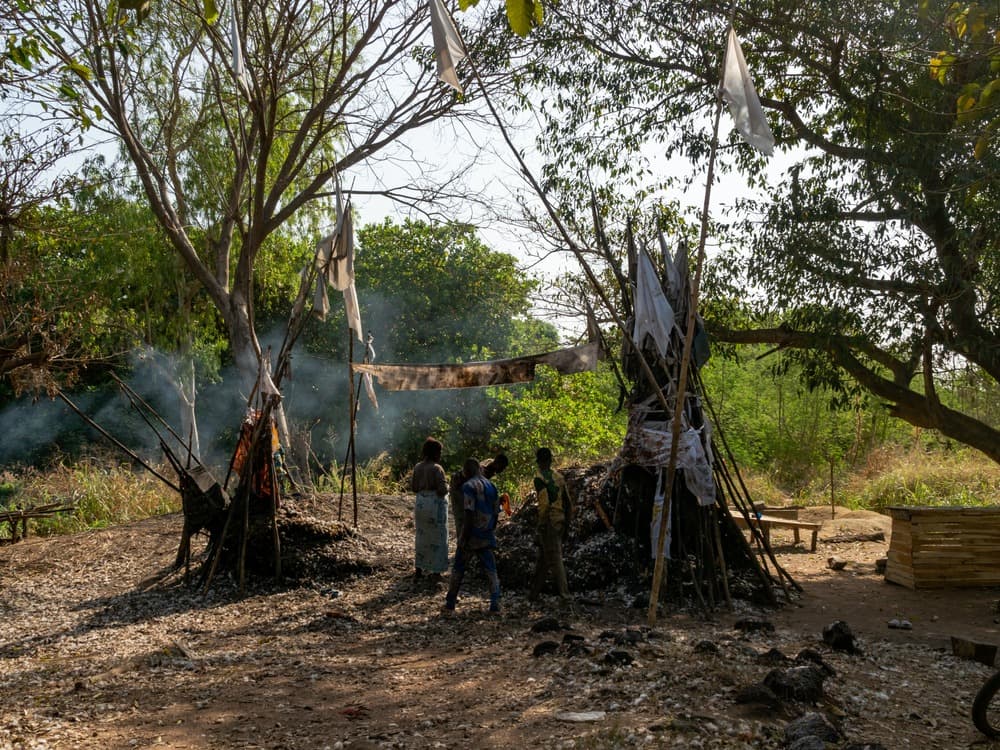
The Dankoli voodoo ritual, adapted to the worshipper's purpose and rank, begins with the purification of hands and feet with blessed water at the entrance of the site. Next, an offering—a nail, coin, or piece of cloth—is prepared. The bringing of animals, such as chickens, goats, or sheep, for sacrifices on-site is also possible. Before the sacred tree, the nail is driven into the trunk with a wish spoken softly. The coin or cloth is placed at the base of the tree as a sign of respect. Physical contact with the tree, through hands or head, allows a connection with the voodoo. The ritual concludes with seven clockwise circles around the tree, accompanied by incantations. Upon leaving the site, the worshipper thanks the voodoo, hoping for the fulfillment of their wish.
What to See Nearby
Savalou, in addition to Dankoli voodoo, offers various points of interest. The royal palace from the 18th century houses a museum dedicated to the history and culture of Dahomey. The artisanal market features local creations in wood, bronze, leather, and beads. For a natural experience, Tanougou Falls, 20 kilometers away, offers a spectacular waterfall ideal for swimming and relaxation.
Geographic Location and Access
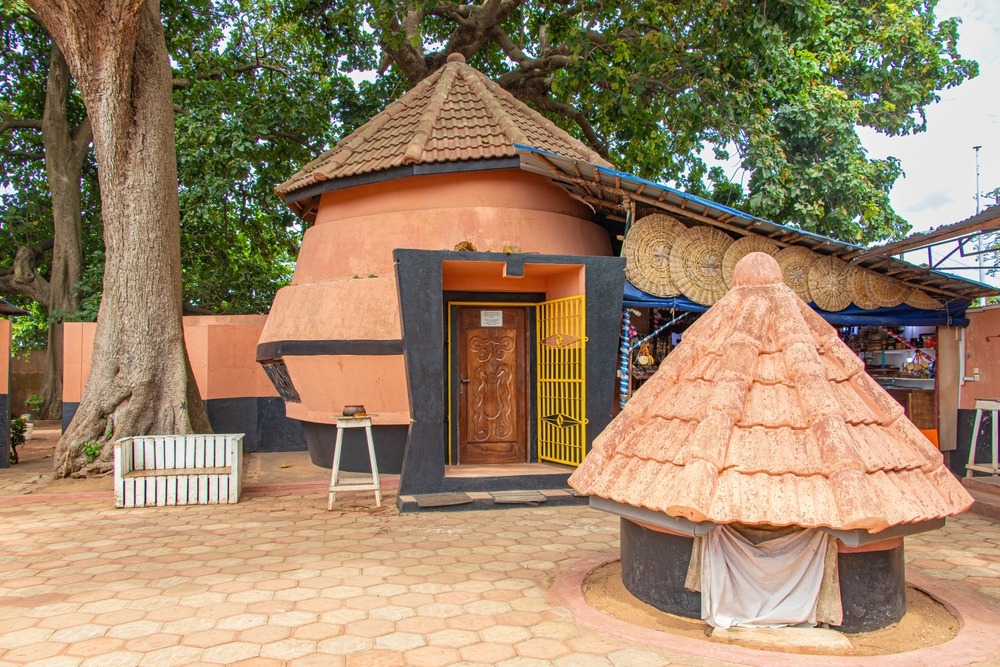
Dankoli voodoo, in Savalou, is located approximately 250 kilometers north of Cotonou, Benin's economic capital. Access is via National Road 1, connecting Cotonou to Parakou, the largest city in the north. The site, roughly 5 kilometers from Savalou's city center on the road to Dassa-Zoumè, is easily identifiable by its gateway adorned with statues and voodoo symbols. This gateway marks the entrance to an estate spanning several hectares that houses the sacred tree and other places of worship.
Practical Advice
To visit Dankoli voodoo, certain rules of propriety and safety must be observed. These include:
– Dress soberly and decently, avoiding overly bright colors or excessively light clothing.
– Bring a local guide, who can explain the meaning and stages of the ritual, as well as negotiate the prices of offerings and sacrifices.
– Do not take photographs or videos without prior authorization, as this could be considered disrespectful or an attempt to steal the voodoo's power.
– Do not touch sacred objects or animals intended for sacrifice, as this could provoke the voodoo's wrath or that of the priests.
– Do not make noise or inappropriate gestures, as this could disrupt the proper conduct of the ritual or offend the faithful.
– Do not make promises you cannot keep, as this could result in harmful consequences for yourself or your loved ones.
Want to discover this destination?
Our local advisors design your tailor-made trip.