Covè
Covè
Just 40 km from Abomey, Covè reveals a cultural and off-the-beaten-path side of Benin: thermal springs, the sacred Kponzoun voodoo forest, and UNESCO-inscribed Guèlèdè masks.
The town of Covè is located in the Zou department of Benin, approximately 40 km from the commune of Abomey. It comprises eight arrondissements in total. Covè has earned its reputation through its wealth of tourist attractions: the sacred forest "Kponzoun", thermal springs, the palace of King Agolin Zéhé, and the legendary Guèlèdè mask tradition. Covè stands as one of the most cherished destinations for travelers seeking authentic experiences.
Geographically, Covè is bordered to the north by the commune of Dassa-Zoumé and to the south by Zogbodomey. To the east lies the boundary with Zagnanado, while the Zou River marks its western edge, irrigating the entire town through its tributaries flowing from the east. Currently, Covè has a population of approximately 45,310 inhabitants according to the latest census. The community comprises several ethnic groups, with the Fon, Yoruba, and Mahi being the most numerous.
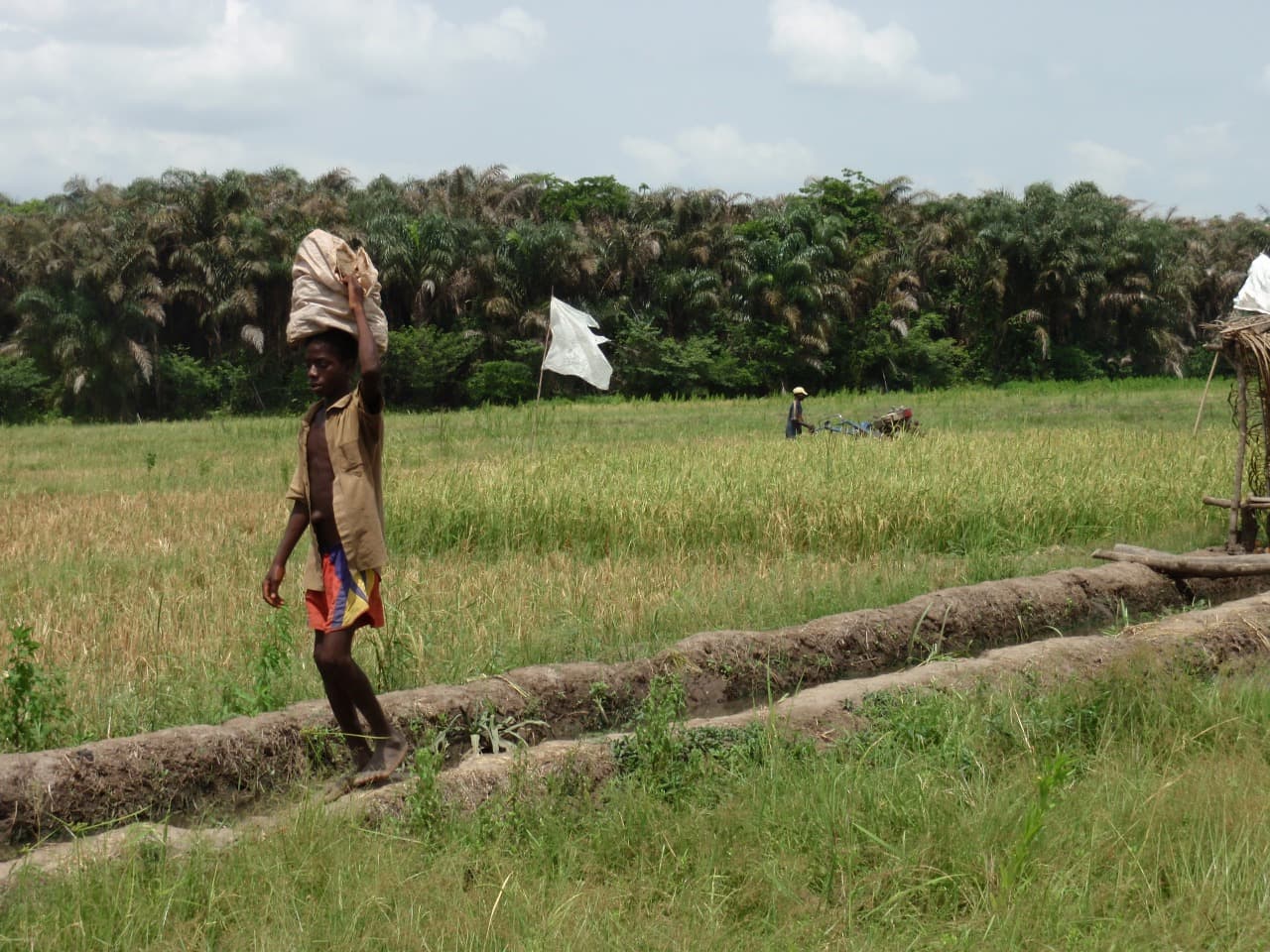
Agriculture Agricultural statistics reveal that less than half of the town's arable land—approximately 40.54%—is cultivated for crop production. Several factors significantly impact agricultural output in Covè. These include the lack of improved crop varieties, rapid soil depletion from overexploitation of vegetation, and inadequate pest control practices in citrus cultivation. The most significant crops are groundnuts, covering 39.9% of cultivated land annually, and maize, accounting for 19.1% of arable land. However, subsistence crops vary according to soil mineral content, with some areas specializing in vegetable production while others excel in tuber cultivation.
Fishing Fishing represents a secondary activity in Covè. Despite the town's location along the Zou River, which provides certain fishery resources, some local fishermen employ destructive practices that threaten future productivity. Additionally, riverbank deforestation causes serious erosion and land degradation.
Tourist Attractions
Covè is renowned for its natural hot spring, a geothermal wonder nestled in a small basin within a verdant forest. The spring invites visitors to enjoy a deeply relaxing experience while bathing beneath a gentle cascade—the water maintains a soothing temperature of 36°C (approximately 97°F).
Beyond this magnificent thermal spring, Covè is equally celebrated for its sacred forest, Kponzoun, where traditional voodoo rituals are conducted. The site features several voodoo temples adorned with fetish objects, offering insight into spiritual practices. After exploring this sacred space, visitors can venture to the palace of King Zéhé of Angoli, situated just outside town. This residence chronicles the king's legacy and preserves artifacts documenting the region's rich history.
To complete a memorable stay, travelers may witness the celebrated ceremony known as "Guèlèdè". Organized by the Yoruba-Nago community—a union of two ethnic groups—this festival features traditional songs performed in the Yoruba language, accompanied by live music, the resonant beat of traditional drums, and masked dances. The Guèlèdè festival takes place following the harvest season, to celebrate important births, or during weddings.
Covè enjoys a subequatorial climate characterized by four distinct seasons: two dry seasons (July to August and December to March) and two rainy seasons (April to June and September to November). The average annual temperature is 27.1°C (approximately 81°F), with significantly higher rainfall during summer months. Average annual precipitation reaches 1,003.4 mm. The optimal travel period spans November through February, when conditions are most favorable.
The most convenient way to reach Covè is from the nearby commune of Bohicon. The town is accessible via the national road RN4, though portions consist of unpaved rural tracks. This route facilitates inter-urban transport, connecting Covè to eastern towns beyond Bohicon. However, travel on these rural roads can be challenging, particularly during the rainy season. For this reason, timing your visit during the dry months ensures a more comfortable journey.
Want to discover this destination?
Our local advisors design your tailor-made trip.