The Divinity of Twins: Practices and Symbolism
The Beninese Vodoun pantheon offers a plurality of divinized and hierarchized spirits whose major spirits are in the Fon language of Benin
The Beninese Vodoun pantheon offers a plurality of divinized and hierarchized spirits whose major spirits are in the Fon language of Benin: HEVIOSSO, SAKPATA, DAN, GOU, FA, TOLEGBA…, to name but a few. Among these divinities, there is one that is special and particular, called XOXO or the divinity of twins. Etymology in Benin, particularly in the south, twins are classified among the divinities. Its origin traces back to the statuette given to Hangbe as a replacement for her twin brother Akaba, who disappeared mysteriously. Indeed, according to history, King Houegbadja (1645-1685) fathered Akaba and Hangbe, twins. Akaba succeeded his father and one day, he is said to have confided to his twin sister Hangbe, saying: "I will not die like everyone else, I will disappear and you will never see me again." He gave his sister a statuette with the following recommendations: "Take this, sister, this is my replacement; consider it as myself. Care for it and know that our symbol is the Monkey."
Tradition thus holds that deceased twins are represented by a statuette that the survivor keeps. Their miracles and various manifestations make them exceptional divinities. Beninese tradition, beyond these scientific conventions, also considers any child born breech (agôssi: girl, agôssou: boy) as a twin and treats them in the same manner as "scientific" twins What meaning is given to the birth of twins, and what does the presence of these divinized beings truly signify, beings to whom all other divinities grant their grace?
Meaning and Significance of Twins
The birth of a twin in a family is never mere chance. In sociological considerations, twins who are born always carry a message. It may be a message of peace, happiness, or joy, but sometimes it can also be an alert, sorrow, or misfortune that will befall the family. The Fâ is the oracle that allows one to question the twins and understand the ins and outs of their arrival. Thus, family members visit the bokônon, very early in the morning. The bokônon summons through his fetish the spirit of the twins, who comes to speak with the parents about their children and to explain the reasons that motivated their arrival in this family. At the same time, the spirit of the twins will give directives concerning the various rituals to be performed so that peace reigns in the family and abundance blesses the parents and kinfolk. They are a sign of happiness. The divinity Xoxo (twins) is a divinity of happiness.
Two Souls Born from the Same Womb on the Same Day
The birth of twins elicits different feelings from one African ethnic group to another. Some will devote boundless adoration to them, believing they are the fruit of a blessing. In the West of the continent in countries like Benin, they are cherished and even somewhat considered as demi-gods. A curious thing indeed that pushes some tourists visiting our beautiful country to take an interest in these entirely separate beings, totally different from ordinary mortals. Moreover, the presence of twins in a family requires its members to constant regard and a thousand precautions. Twins represent active masculine and passive feminine energies. When the birth of twins occurs in a group devoted to Voodoo, it creates great emotion. Many cultural and religious practices have resisted time and reached present generations. Even rampant evangelization that has invaded populations has not truly shaken the people's faith in their beliefs regarding the twin cult. Despite modernization, certain cultural practices such as the twin cult resist time across the entire Beninese territory. This explains the fact that in many families, paramount importance is accorded to the veneration of twin statuettes. Their birth is an occasion to greet the arrival on earth of exceptional beings. In Benin, the mother of mixed-sex twins is considered an elect of God who has given life to beings who will have a great destiny and is the object of much attention. Yet for Westerners, mixed-sex twins are not true twins.
How Are Twins Represented?
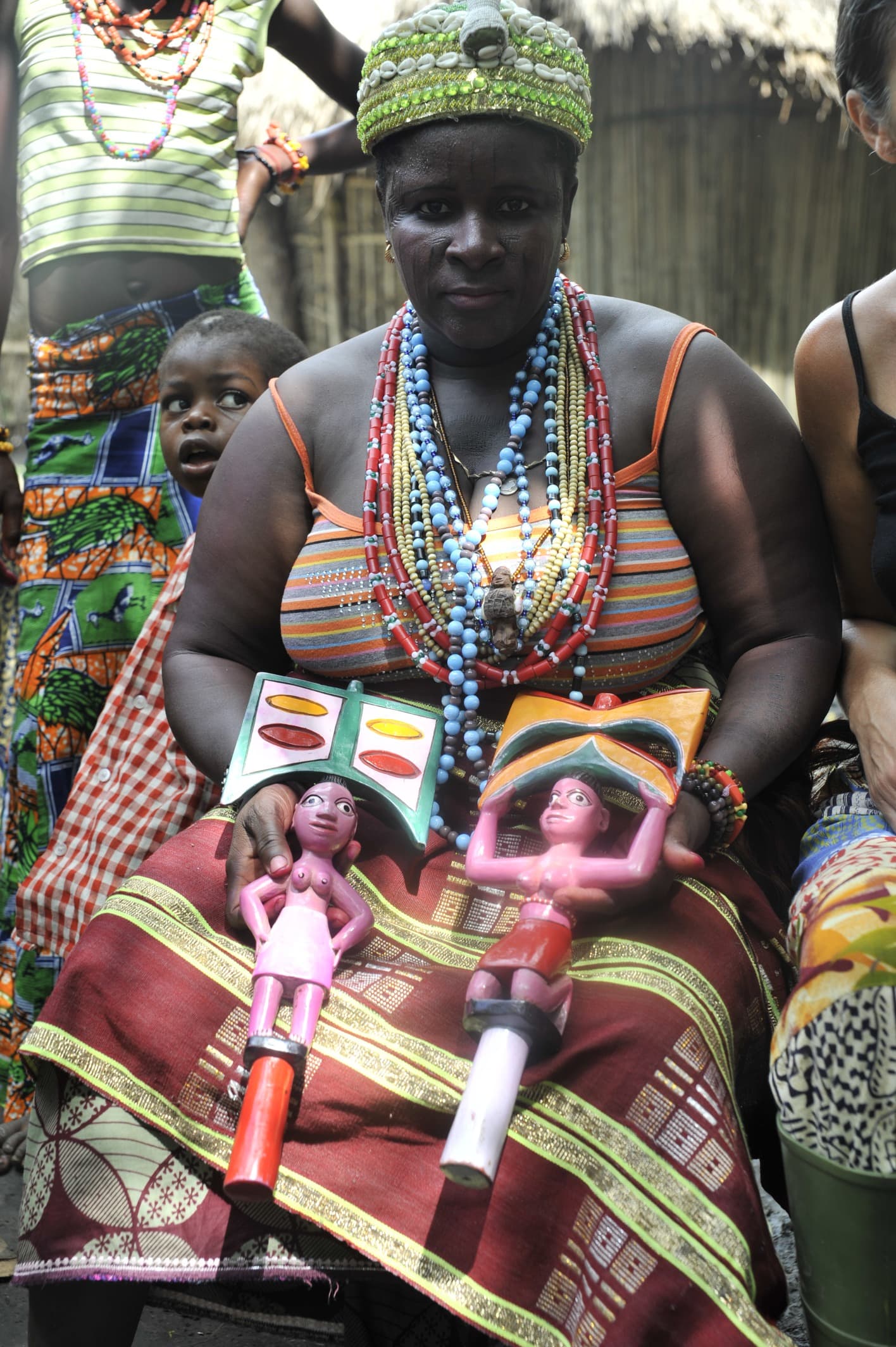
Once born, they become part of their parents' daily life, even if they are no longer present on earth in their mortal form. When one twin dies, the survivor sets aside half of their food and half of all gifts they receive. In Beninese tradition, the deceased child is replaced by a figurine that is fed, dressed, washed, and carried as a living child would be. This figurine takes the place of the deceased. The woman even carries in a cloth wrapped around her waist the figurines of the dead twin or twins, as well as the figurine of the ancestor spirits. Woods, sculpted and yellowed in the form of a human being. Some would call them African-style dolls. This is what most foreigners think when they first make contact with the ''xoxo''. But in reality, these statuettes are more than wood. They represent the guardians of the souls of deceased twins. Thus was born the cult of twins, a cult that still commands the admiration of many tourists who have had the privilege of witnessing and touching the veneration of the divinity of twins.
Ritual Practices Dedicated to the Divinity of Twins
"Twins do not die, they have gone to fetch firewood from the forest". This is what most suggest. These genetically and morphologically identical beings who are venerated in African tradition and considered as a divinity come to dwell among humans. These statuettes that cohabit with men, far from being fetishism or irrational behavior, reveal the sociocultural reality of several communities and other Beninese tribes. One of the peculiarities of Voodoo in Benin is undoubtedly the veneration of twins. It occupies a position that traces back to African ancestral customs. In tradition, the respect enjoyed by twins, living or dead, rests on belief in a couple of divine twins. Each family having twins, dead or living, must make offerings. The prescriptions of the spirit of the twins vary from one twin to another and from one family to another. But what remains constant is that during the twin ceremony, they designate new parents, namely: father, mother, uncle, and aunt. Special meals are prepared based on palm oil and cornmeal flour. In daily life, it is important to treat both children equally. Otherwise, they may react with great sensitivity. In Voodoo, it is believed that this lack of respect toward the statuettes translates into more illnesses and misfortunes within families having twins. It sometimes even happens that twins cast powerful spells against their parents, which often results in an unidentifiable illness. If such an act is discovered, the Voodoo priest must, during a ceremony, punish the children until they swear to remove the spell they have cast against their parents.
The Cult of Twins Attracts Tourists
Many Beninese accord unprecedented devotion to the representation of their twin children or brothers. Fauna and national parks may attract tourists during their various trips to the country, but this cult dedicated to twins captures their attention more because beyond the wooden statuettes, these are souls to be venerated. This phenomenon of soul reincarnation and the call of the soul through sculptures remain a mystery not yet elucidated for most foreign visitors who come as tourists to Benin. Some tourists leave Beninese territory without having the chance to see an altar of the divinity of twins, nor even to witness once a ritual dedicated to the divinity of twins. Yet this divinity is an integral part of Benin's rich, yet unexplored cultural heritage by thousands of tourists. It remains the country's great curiosity. Without being exhaustive, one cannot overlook the importance of this cult in Beninese tourism. Praises are sung and particular care is taken of these small beings thought to possess very great power. Indeed, they enjoy certain privileges. It is somewhat clearer that one cannot visit Benin's tourist landscape without visiting the altar of the divinity of twins where you may be miraculously healed by their supernatural healing powers, but also benefit from a multitude of graces. Benin is a haven of twins, so the chance of encountering this type of amulet during a trip is high. Of all the vodum, the cult of twins is the most powerful and most venerated, both in Benin and in Africa. Make your stay in Benin perfect by taking the path that leads to the divinity of twins.
Frequently asked questions
The cult of twins, called Xoxo in the Beninese Vodoun tradition, venerates twins as divinities capable of bringing happiness, peace, or warning to their family. Living or deceased, they are represented by sacred statuettes cherished and maintained by their loved ones.
According to tradition, the cult of twins finds its origin in the statuette given by King Akaba to his twin sister Hangbe, daughter of King Houegbadja (1645-1685). This statuette symbolized his soul and was to be venerated as himself after his mysterious disappearance.
When one twin dies, a sculpted wooden figurine is created to represent their soul. The surviving twin must feed, dress, and cherish this statuette as if it were the living child. This practice is at the heart of the twin cult in Beninese Voodoo.
Yes, some tourists have the opportunity to attend ceremonies dedicated to twins, though access is not systematically guaranteed. It is recommended to be accompanied by a local guide familiar with practicing families and to strictly respect cultural protocols during these ceremonies.
The bokônon is a priest-oracle who uses the Fâ to communicate with the spirit of the twins. He receives families very early in the morning, interprets the twins' messages, and prescribes the rituals to be performed (offerings, meals based on palm oil and cornmeal flour) to ensure peace and abundance in the family.
Benin occupies a particular place in this cult because twins are fully considered demi-gods in the Vodoun cosmology. Even children born breech (agôssi for girls, agôssou for boys) are treated as twins. This spiritual syncretism, resistant to modernization and evangelization, makes it a living and unique tradition on the continent.